Black
Black Blue
Blue Brown
Brown Gray
Gray Green
Green Neutral
 Orange
 White
White Yellow
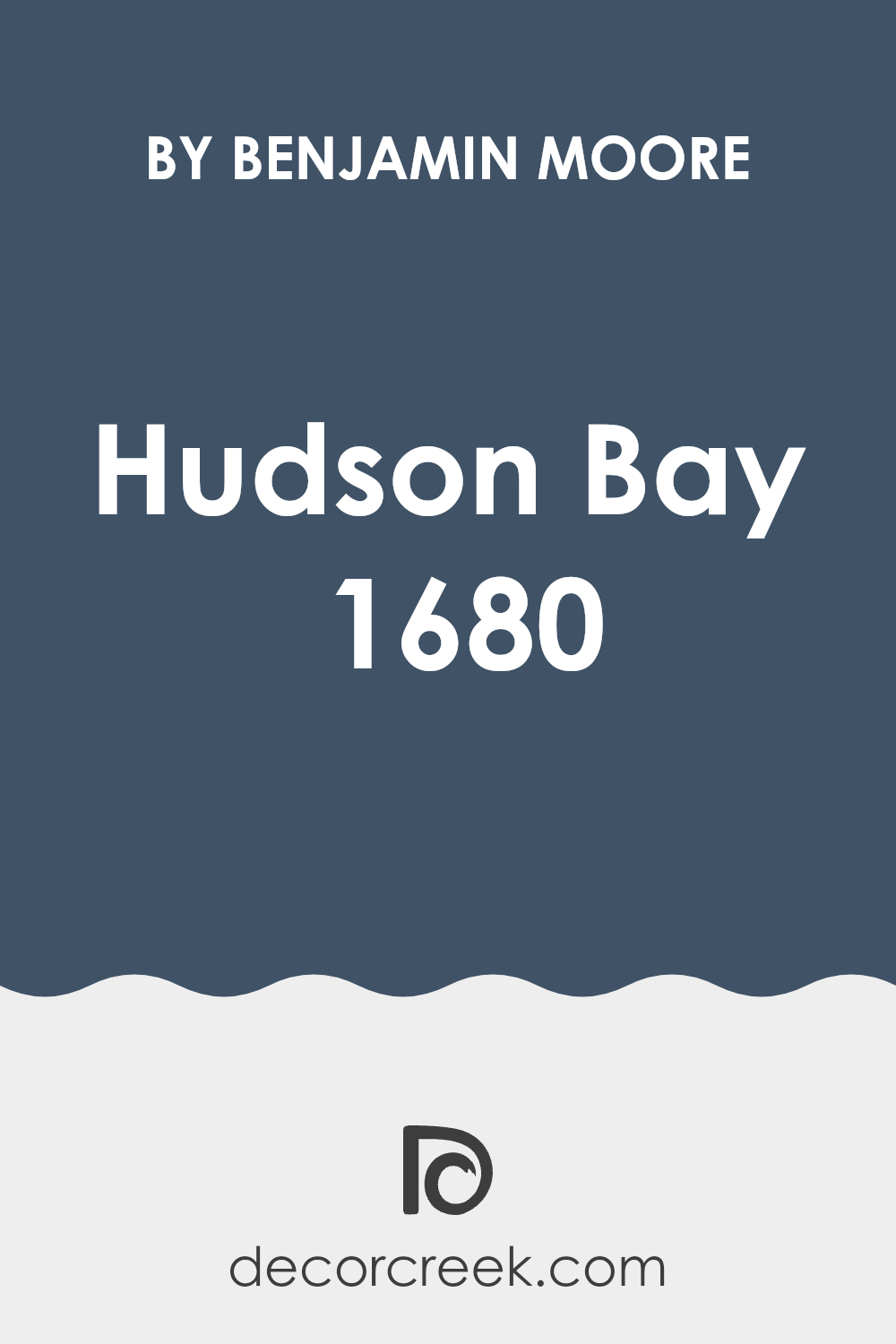
If you’re thinking about giving your area a fresh, updated look with a new paint color, you might want to consider 1680 Hudson Bay by Benjamin Moore. As a unique shade of blue with subtle gray undertones, it provides a soothing presence in any room without being too much. I recently used this color in a bedroom remodel and was delighted with the soft yet distinct impact it brought to the area.
Choosing a paint color can often be too much due to the sheer number of options available. Yet, I found 1680 Hudson Bay to be a reliable choice that pairs wonderfully with various decor styles and furniture hues. It particularly shines in well-lit areas, where natural light accentuates its complexity and depth.
Whether you’re updating a single room or planning a larger renovation, this color can offer a calm backdrop to your daily life, enhancing the overall feel of your home while keeping things chic and understated.
Its flexibility also means it can easily be dressed up with bold accents or kept simple for a more minimalistic look.
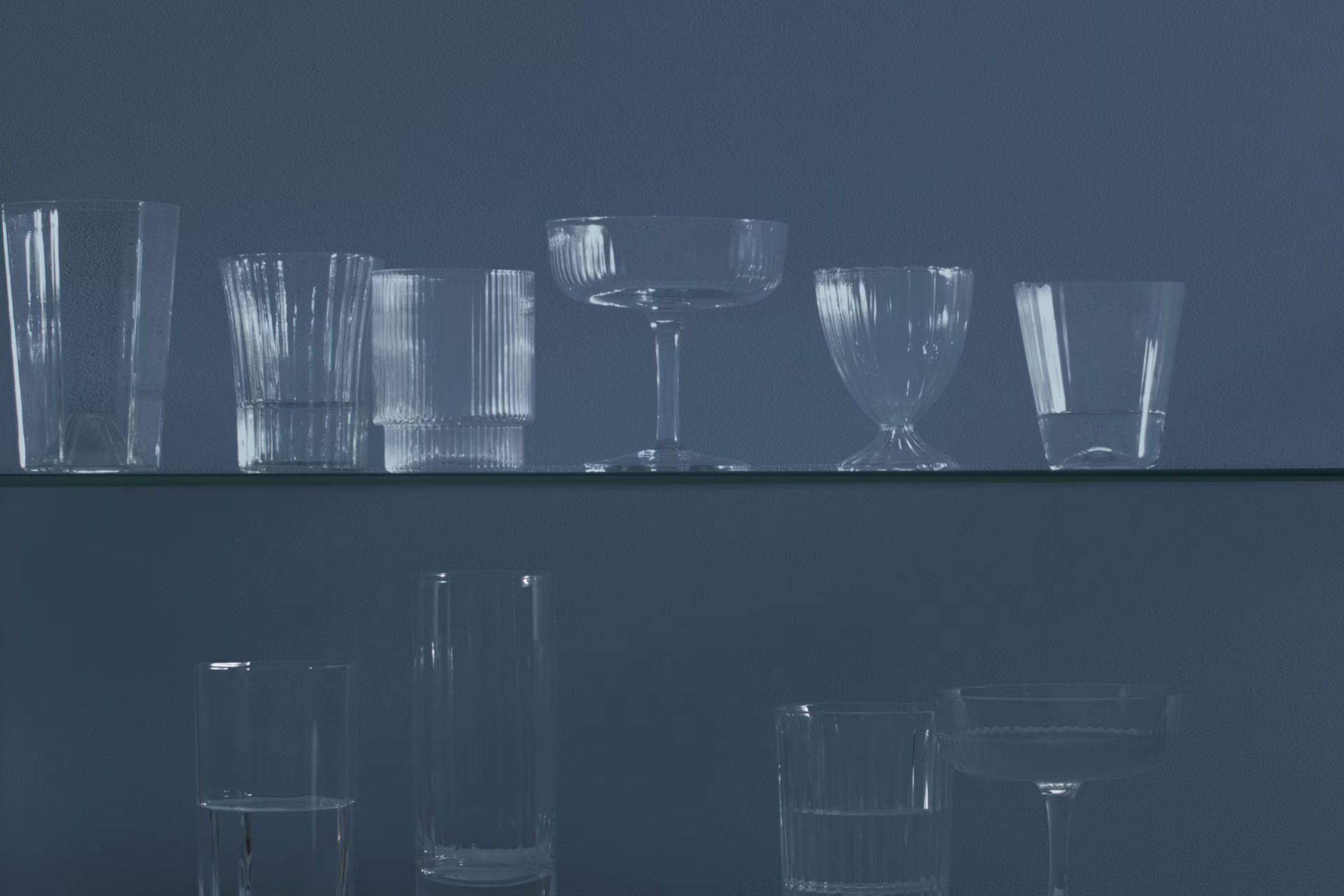
What Color Is Hudson Bay 1680 by Benjamin Moore?
The color Hudson Bay by Benjamin Moore is a rich, vibrant shade of blue with deep green undertones. It brings to mind the deep waters of its namesake, and its boldness is both striking and cozy. This color works wonderfully in living areas that aim for a feeling of warmth and intimacy. It particularly shines in modern and coastal interior styles, offering a lively but not too much backdrop.
For furniture and accents, Hudson Bay pairs nicely with natural materials such as light woods, wicker, and linen, introducing a gentle contrast that grounds the area. It also matches well with textured finishes like plush throws or fluffy rugs, which help soften the intensity of the color. Metallic accents in gold or brass can add a touch of luxury to the overall atmosphere without distracting from the main color scheme.
In rooms with plenty of natural light, Hudson Bay maintains a vivid depth that changes subtly with the lighting throughout the day. Even in artificially lit areas, this color maintains its dynamism, making it an excellent choice for creating an engaging and cozy area.
It’s perfect for those looking to create an area that feels both grounded and alive, without overpowering the senses.
Is Hudson Bay 1680 by Benjamin Moore Warm or Cool color?
Hudson Bay by Benjamin Moore is a rich, vibrant teal color that brings energy and warmth to any room. This shade is flexible, working well in both modern and traditional areas. When used on walls, Hudson Bay creates a cozy yet lively backdrop that can enhance the mood of any interior.
It pairs wonderfully with neutral tones like whites or grays, allowing furniture and decor to stand out without overpowering them. Also, this color is great for accent walls or on furniture pieces to give a room a splash of character.
In natural light, Hudson Bay looks refreshing and can make a room feel more open and inviting. It’s an excellent choice for living areas or bathrooms, where you want a balance of calm and cheerfulness. When properly used, this color can make small rooms appear bigger and darker areas brighter, which is a useful trick for enhancing the feel of your home.
Undertones of Hudson Bay 1680 by Benjamin Moore
Hudson Bay by Benjamin Moore is a complex paint color with multiple undertones that greatly influence its appearance in any area. This paint has a rich blend of undertones including dark turquoise, dark grey, dark green, purple, grey, brown, olive, dark blue, blue, violet, and lilac. Undertones are subtle colors that lurk beneath the surface of the main color, affecting how it looks in different lighting conditions and against different furnishings.
In general, undertones can make a color appear cooler or warmer depending on the light and surrounding colors. For example, in an area with a lot of natural light, Hudson Bay might show more of its blue or green undertones, making the walls seem fresh and vibrant. In artificial or dim lighting, the darker undertones like dark grey or brown might become more pronounced, giving the area a more grounded and cozy feel.
When used on interior walls, the complexity of Hudson Bay allows it to adapt uniquely to different areas. The mix of undertones can interact with furniture and decor, either complementing or contrasting, depending on what you are aiming for. If the area has a lot of wooden elements, the brown and olive undertones might stand out, tying the area together. On the other hand, metallic or modern decors could highlight the cooler greys and blues, creating a more dynamic area.
By understanding these undertones, one can better predict how Hudson Bay will behave in their specific setting, allowing for more informed decorating choices that best fit personal tastes and existing interiors.
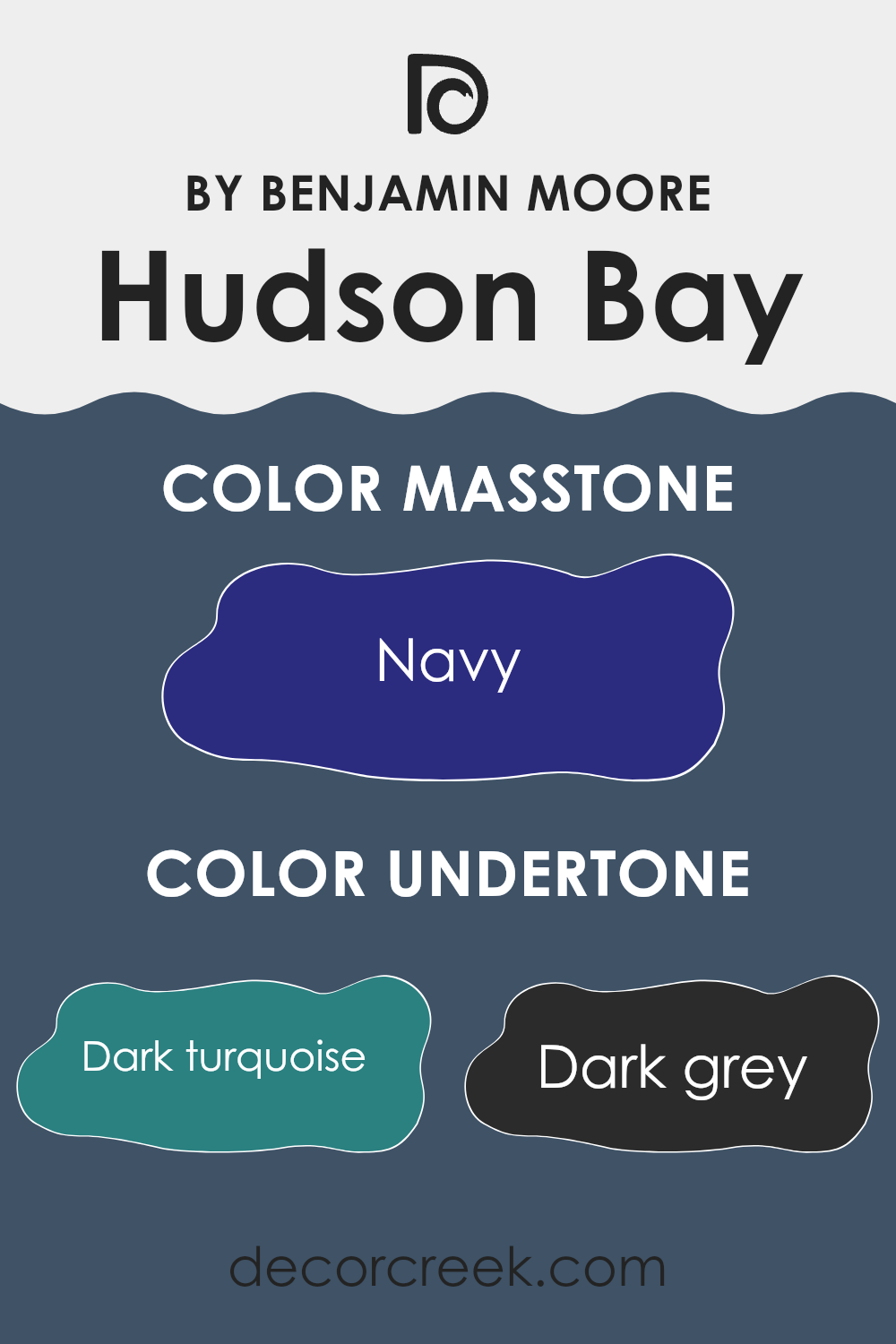
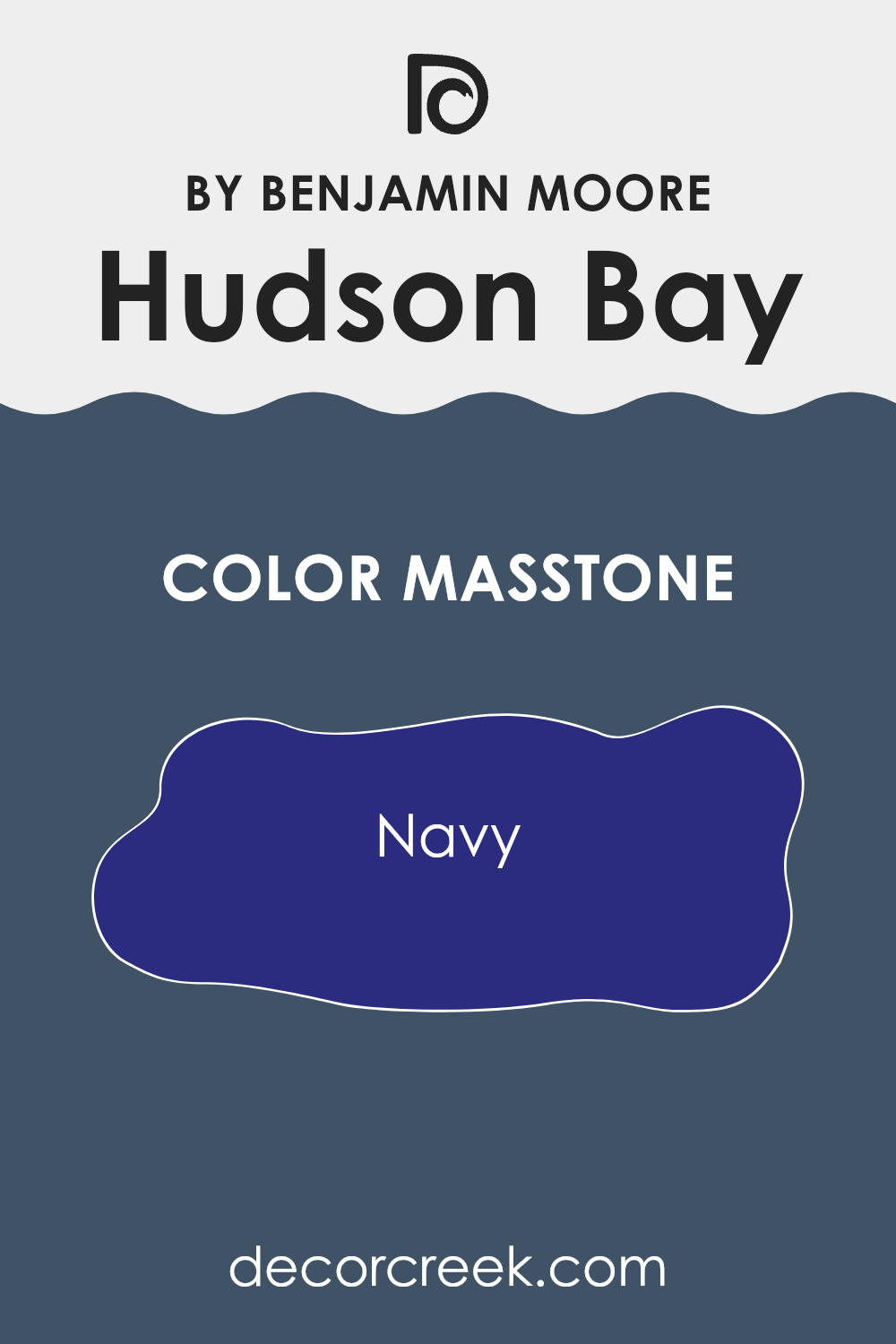
What is the Masstone of the Hudson Bay 1680 by Benjamin Moore?
Hudson Bay (#2B2B80) by Benjamin Moore is a rich navy masstone that brings a bold and cozy feel to any room. This dark blue shade has a strong presence and can make a striking statement when used in homes. It is especially effective in creating a focal point in an area when applied to accent walls or furniture pieces. The deep navy color can also help in making large, open areas feel more intimate and grounded.
When paired with lighter colors like whites or creams, Hudson Bay can provide a nice contrast that enhances the overall aesthetic of an area. It works well in living rooms, bedrooms, or even home offices, providing a calm yet strong backdrop for other decor elements.
Additionally, the color can add depth to a room when used on cabinetry or doors, complementing a variety of home styles from modern to traditional. This flexibility makes it a popular choice for those looking to add a touch of elegance without making an area feel too much.
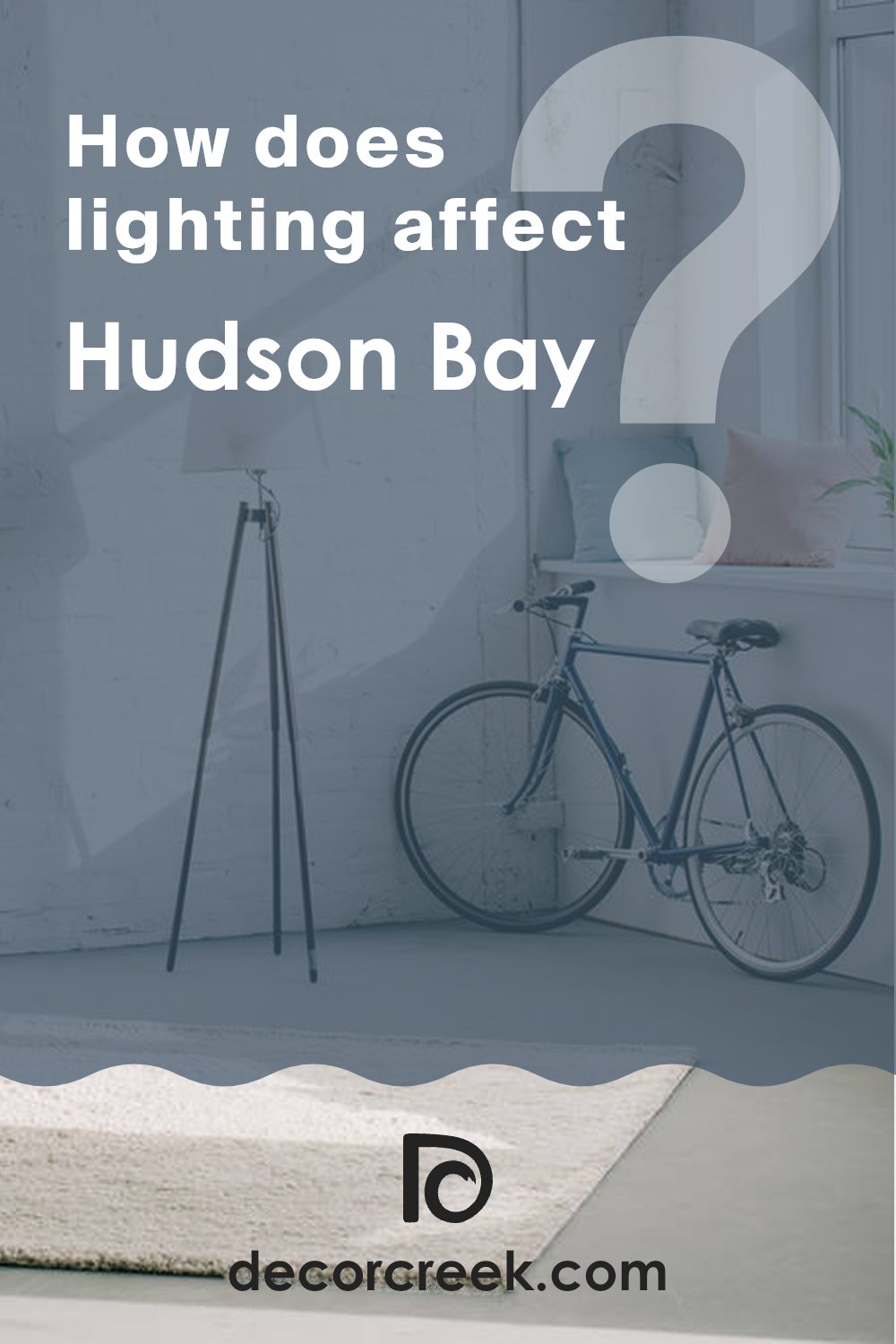
How Does Lighting Affect Hudson Bay 1680 by Benjamin Moore?
Lighting has a significant impact on how we perceive colors. Colors can appear different depending on whether they are viewed under natural or artificial lighting. This is because light sources vary in their color temperature and intensity, affecting the way colors look.
The color Hudson Bay is a vibrant choice from Benjamin Moore. Under artificial light, such as incandescent bulbs, this color tends to look warm and inviting, as these lights have a yellowish tint which enhances warmer tones. In LED or fluorescent lighting, which can have a cooler or bluish tone, Hudson Bay might appear slightly more muted, with its deeper undertones becoming more pronounced.
In natural light, the appearance of Hudson Bay also changes throughout the day. Natural light is generally cooler at midday and warmer during sunrise and sunset, affecting how this color is perceived. In a north-facing room, natural light is typically softer and cooler, which can make Hudson Bay appear more subdued and less vibrant. These rooms might not fully bring out the warmth of Hudson Bay, making it appear more neutral.
Conversely, in south-facing rooms, where light is warmer and more abundant for the most part of the day, Hudson Bay can appear brighter and more lively. This room orientation enhances the vibrant and energetic qualities of the color.
In east-facing rooms, Hudson Bay will be hit by the warm tones of the morning sun, making the color look very inviting and warm in the morning while becoming softer and more subdued as the sun moves. West-facing rooms, however, will see the color performing oppositely—starting cooler in the morning, then warming up in the late afternoon when the setting sun casts warm light, brightening the color with a rich, warm glow. Overall, the lighting and orientation of rooms can greatly influence how Hudson Bay looks, shifting from vibrant and warm to more muted and cool.
decorcreek.com
What is the LRV of Hudson Bay 1680 by Benjamin Moore?
LRV stands for Light Reflectance Value, which measures the percentage of light a paint color reflects back into the room as opposed to absorbing it. The scale used is commonly from a range of one to a hundred, with lower values indicating that the color absorbs more light and higher values meaning it reflects more light back into the room.
This measurement is crucial when choosing paint colors because it helps predict how light or dark a color will appear once applied to the walls of a room. A higher LRV can make a small room feel more open and airy, while a lower LRV can make an area feel cozier and more enclosed.
With a LRV of 9.77, Hudson Bay by Benjamin Moore is a color that falls on the lower end of the scale, meaning it’s quite a dark shade. This lower LRV suggests the color will absorb a significant amount of light, making it an ideal choice for creating a dramatic or intimate atmosphere in an area. It might not be the best choice for a small, dim room where you want to create a sense of spaciousness.
However, in a well-lit or larger area, this deep color can add a rich, enveloping feel, perfect for enhancing ambiance and focusing attention in the room.

Coordinating Colors of Hudson Bay 1680 by Benjamin Moore
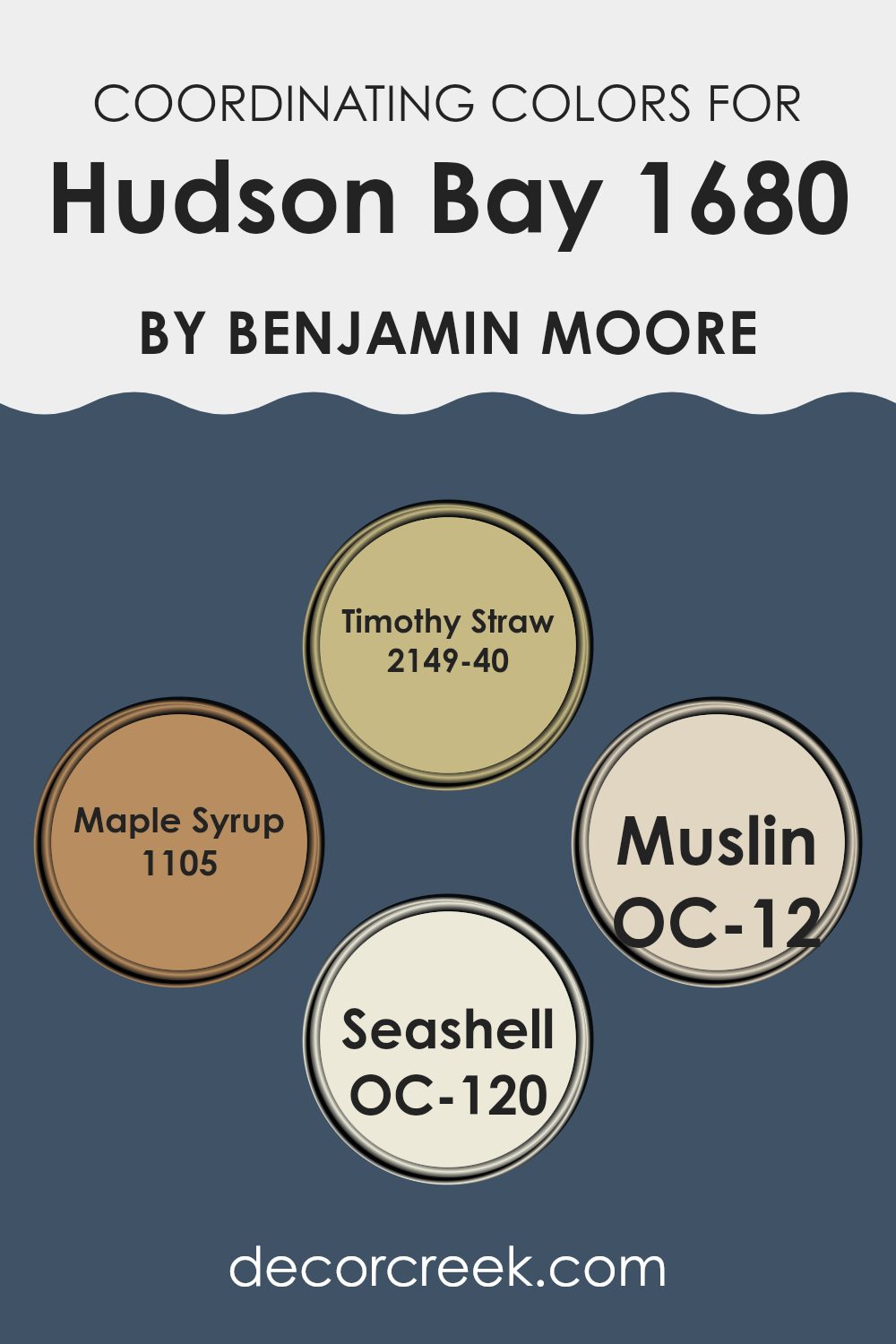
Coordinating colors are hues chosen to complement a main color, enhancing the aesthetics of a room or a design composition. These colors can bring harmony and balance, creating a pleasing palette when used together effectively. When selecting coordinating colors, like those paired with Hudson Bay by Benjamin Moore, it’s important to consider how the tones complement each other in terms of their warmth, depth, and saturation.
Timothy Straw 2149-40 sports a muted yellow, offering a gentle contrast to stronger primary colors, warming up areas without making them too much. Maple Syrup 1105 is a rich, deep amber that provides a natural, earthy quality, perfect for creating a cozy, inviting environment. Muslin OC-12 is a soft, neutral beige that works beautifully to balance out bolder shades, ensuring the area feels light and airy.
Lastly, Seashell OC-120 is a light, almost ethereal cream that adds a subtle brightness to any color scheme. Each of these colors, when used alongside the vibrant Hudson Bay, contributes to a cohesive and harmonious look that enhances the overall aesthetic appeal of the home or design project.
You can see recommended paint colors below:
- 2149-40 Timothy Straw
- 1105 Maple Syrup
- OC-12 Muslin
- OC-120 Seashell
What are the Trim colors of Hudson Bay 1680 by Benjamin Moore?
Trim colors are specific shades selected to complement or contrast the main colors of a room, generally used for door frames, moldings, and other architectural features.
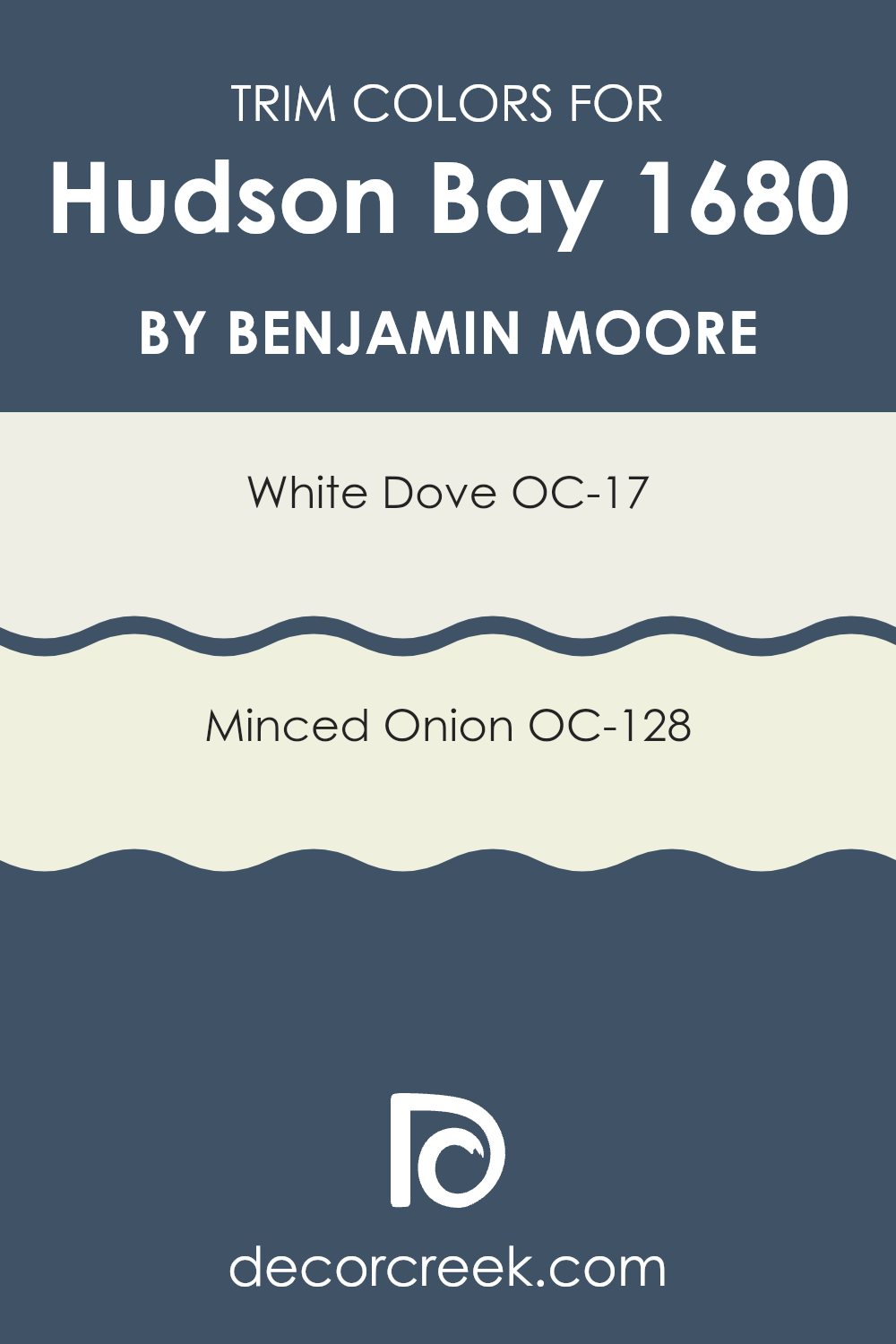
They are essential in defining the aesthetic appearance of an area as they highlight the structural lines and can enhance the overall ambiance. For the shade Hudson Bay by Benjamin Moore, choosing the right trim colors, such as OC-17 White Dove and OC-128 Minced Onion, can bring balance and cohesion to the décor.
White Dove OC-17 is a flexible off-white that provides a clean, crisp finish, making it an excellent choice for trim as it subtly contrasts with deeper hues like Hudson Bay without making the area feel too much. On the other hand, Minced Onion OC-128 offers a slightly warmer, light beige tone that adds a gentle, welcoming feel to areas, complementing the cooler notes of Hudson Bay and ensuring the environment remains light and inviting. Using these colors for trims can effectively frame the room, enhancing both its character and visual appeal.
You can see recommended paint colors below:
- OC-17 White Dove
- OC-128 Minced Onion
Colors Similar to Hudson Bay 1680 by Benjamin Moore
Choosing similar colors for your design palette can greatly enhance the aesthetic harmony of an area. Colors like HC-155 – Newburyport Blue, HC-156 – Van Deusen Blue, 805 – New York State of Mind, and 840 – Kensington Blue all share a common blue tone that provides a cohesive look while allowing for subtle distinctions.
This similarity in hues helps create a smooth visual flow from one area to another in a room or across a home, making the areas feel connected and intentional. Such color schemes are ideal for creating a uniformed theme without the monotony, as each shade maintains a unique character while still complimenting its counterparts.
Let’s take a closer look at each shade. Newburyport Blue offers a cozy, deep blue that gives a rich backdrop, ideal for accent walls or furniture pieces. Van Deusen Blue is slightly more intense, offering a striking presence that works wonders in areas that need a bold statement. New York State of Mind is an expressive blue that captures the dynamic essence of its namesake city with a lively energy, perfect for vibrant, modern areas. Lastly, Kensington Blue provides a more muted, soft blue which works beautifully in more relaxed, subtle decors. Together, these colors provide a flexible range of options that can meet various design needs while ensuring visual continuity and appeal.
You can see recommended paint colors below:
- HC-155 Newburyport Blue
- HC-156 Van Deusen Blue
- 805 New York State of Mind
- 840 Kensington Blue

Colors that Go With Hudson Bay 1680 by Benjamin Moore
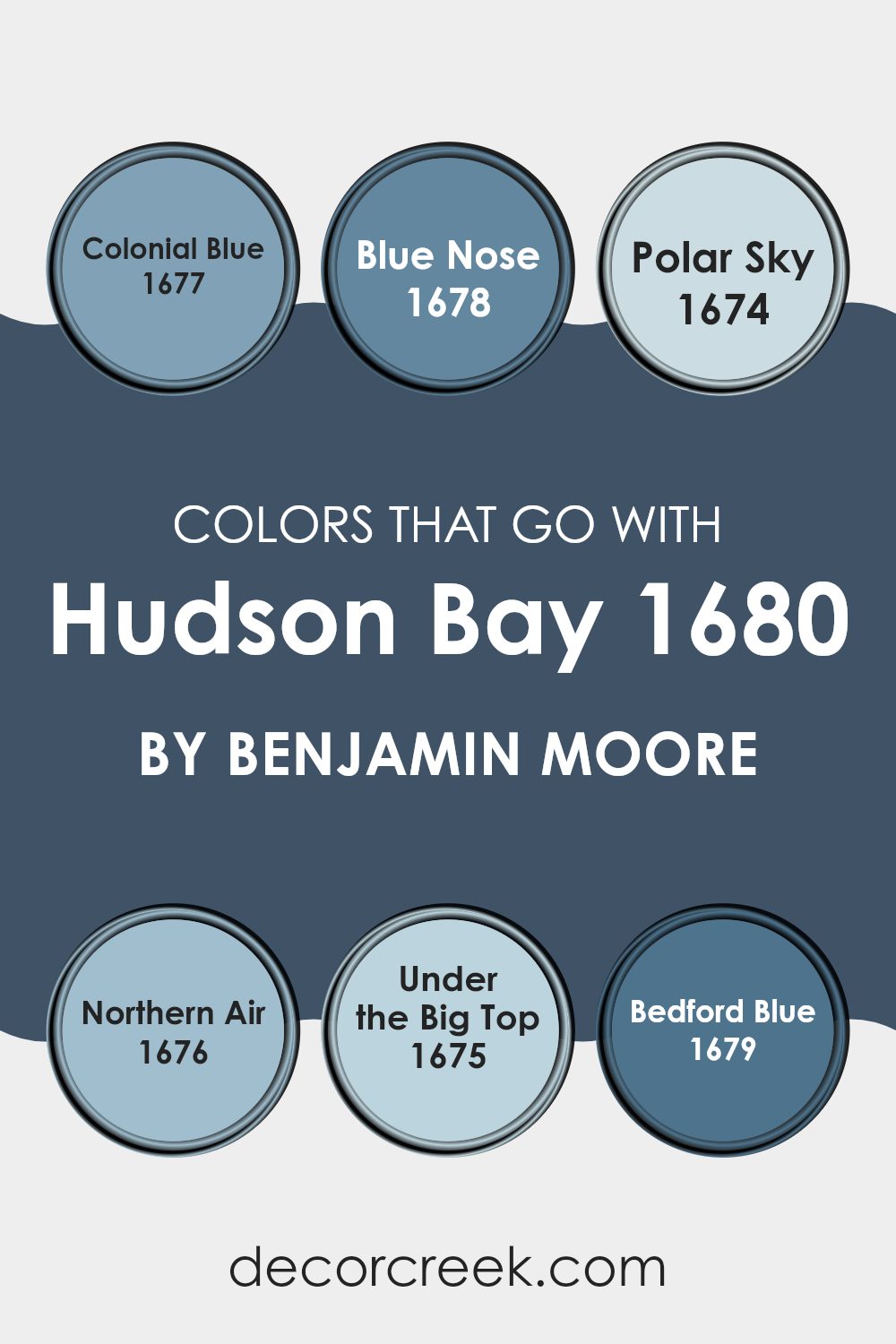
Colors that harmonize with Hudson Bay 1680 by Benjamin Moore are crucial in creating a cohesive interior design. Choosing the right complementary colors ensures a balanced and appealing aesthetic, which can enhance the mood and overall feel of a room. For instance, if Hudson Bay is used as a primary color, incorporating shades like Colonial Blue or Blue Nose can create a sense of harmony and continuity in areas where the goal is to evoke a calm and comfortable environment. These additional colors help in catering to different lighting conditions and personal preferences while maintaining a unified look.
Colonial Blue, a soft and engaging blue, has a subtle strength that can help in establishing a grounded, yet airy atmosphere. This is especially useful in bedrooms and living areas where a relaxed environment is desirable. Blue Nose is slightly bolder with a vivid touch that catches the eye; perfect for accent walls or furniture pieces to add a lively contrast against the mellow backdrop of Hudson Bay.
Polar Sky, with its light and almost ethereal quality, can add a refreshing touch, making it ideal for bathrooms and kitchens for a crisp, clean look. Northern Air, a muted blue with a hint of grey, works beautifully to provide a neutral base that complements bolder colors. Under the Big Top adds a dash of brightness, suitable for children’s rooms or creative areas to stimulate energy and creativity.
Lastly, Bedford Blue’s rich depth offers a striking option for dining areas or entries, anchoring areas with its robust tone. Together, these colors create a flexible palette that accommodates various design tastes and purposes, making them key to achieving a visually pleasing and functional home environment.
You can see recommended paint colors below:
- 1677 Colonial Blue
- 1678 Blue Nose
- 1674 Polar Sky
- 1676 Northern Air
- 1675 Under the Big Top
- 1679 Bedford Blue
How to Use Hudson Bay 1680 by Benjamin Moore In Your Home?
Hudson Bay 1680 by Benjamin Moore is a vibrant and flexible paint color that can add a beautiful splash of vitality to any room in your home. With its deep blue hue, it brings to mind the calmness of a deep ocean or a clear night sky, making it perfect for creating a cozy and inviting atmosphere.
Whether you choose to paint an accent wall in your living room to act as a stunning backdrop for art and photos, or decide to use it in a bedroom to create a restful retreat, this color is both bold and comforting.
Additionally, Hudson Bay 1680 works well in bathrooms or offices, where its unique shade can help to liven up the area. Pairing it with lighter colors like whites or grays can maintain a balance, ensuring that the room feels both lively and harmonious. This color is a great choice for anyone looking to add a touch of personal style and warmth to their living area.
Hudson Bay 1680 by Benjamin Moore vs New York State of Mind 805 by Benjamin Moore
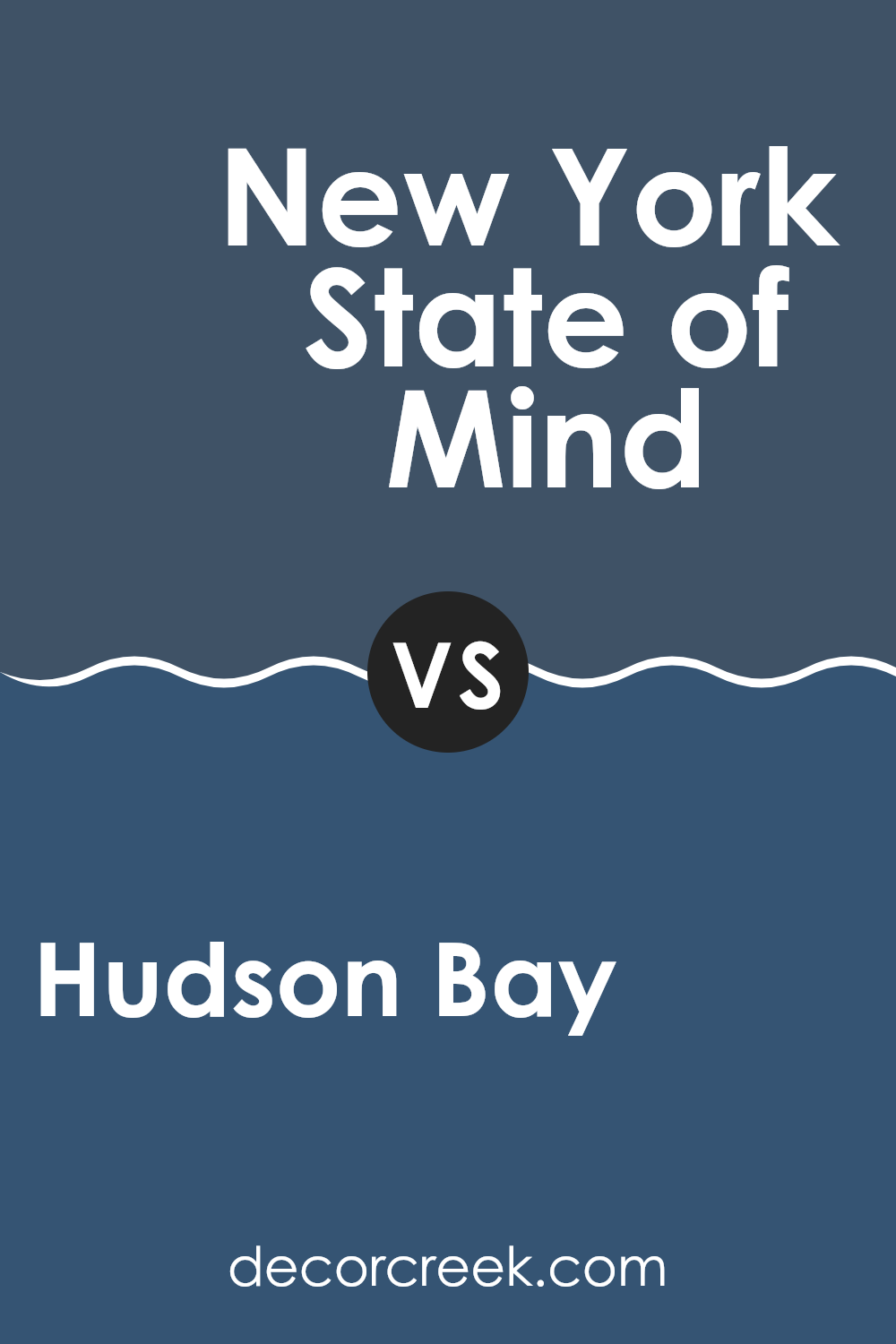
Hudson Bay and New York State of Mind are both rich, deep colors by Benjamin Moore, yet they create quite different vibes. Hudson Bay is a strong, deep blue with a hint of green, making it vibrant and energetic, perfect for adding a striking touch to an area.
On the other hand, New York State of Mind is a bold, deep navy blue that offers depth and intensity, ideal for creating a strong, stylish look. While Hudson Bay can lighten a room with its slightly brighter undertones, New York State of Mind brings a more classic, steady feel, often used for a touch of elegance.
Both colors are quite powerful and can define a room’s mood quickly, whether you’re looking for something lively or more grounded. Depending on the lighting and accompanying decor, each color can significantly impact the room’s aesthetic.
You can see recommended paint color below:
- 805 New York State of Mind
Hudson Bay 1680 by Benjamin Moore vs Kensington Blue 840 by Benjamin Moore
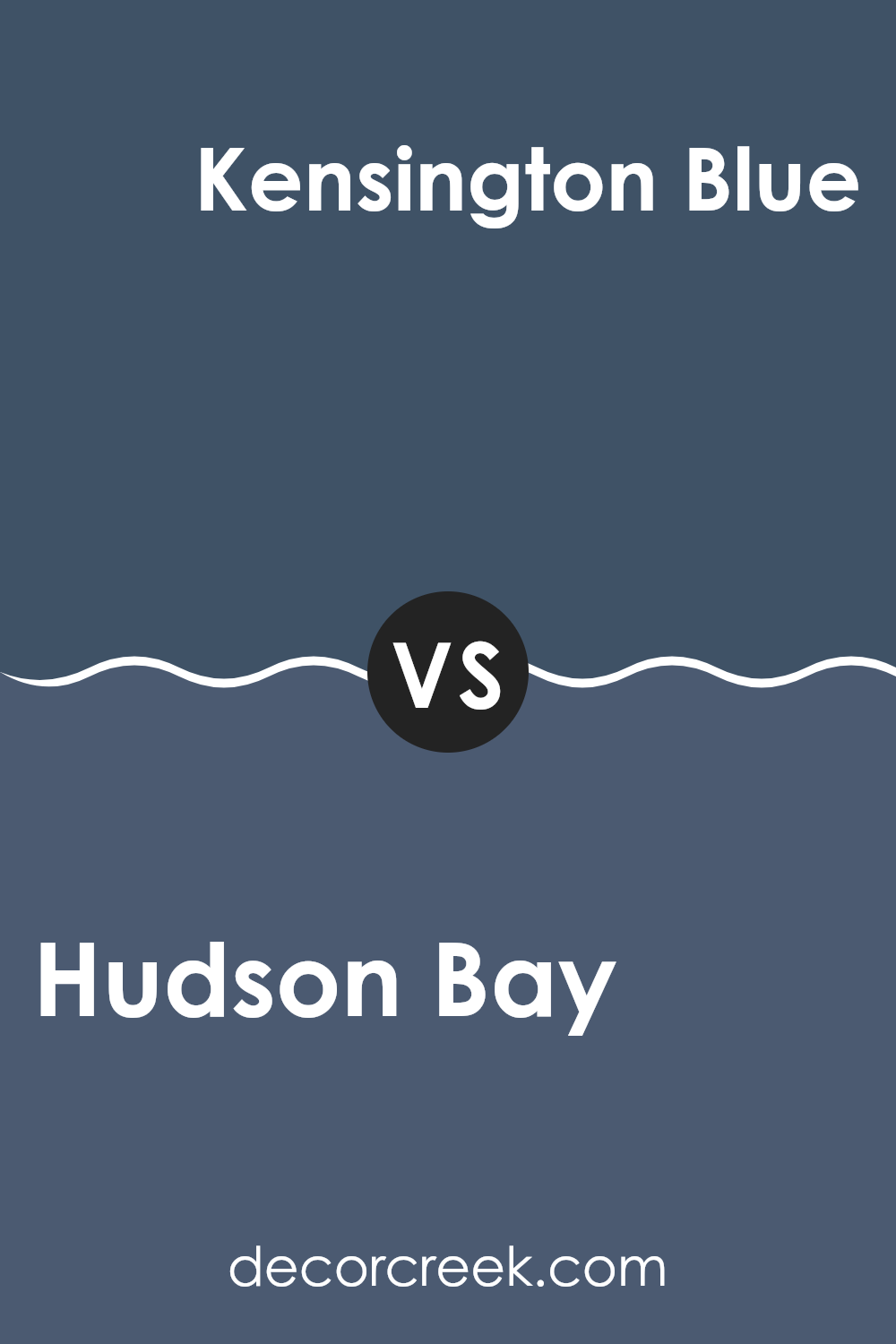
The main color Hudson Bay is a deep, teal blue that adds a bold and lively touch to any room. This color has a rich vibrancy that can make areas feel dynamic and full of energy. It’s perfect for creating a statement wall or for accents that draw attention.
On the other hand, Kensington Blue is a more subdued navy blue. It offers a classic and lasting look, providing a sense of steadiness and quiet strength. This shade is ideal for areas where you want to foster a calm and collected atmosphere. It works well in settings that aim for a more reserved and formal look.
Both colors share a blue base, but their vibes and impacts are distinct. Hudson Bay pops with an exciting teal influence, while Kensington Blue remains grounded with its darker, more traditional navy tone. Each brings its unique flair to decorations, fitting different moods and styles within home interiors.
You can see recommended paint color below:
Hudson Bay 1680 by Benjamin Moore vs Newburyport Blue HC-155 by Benjamin Moore
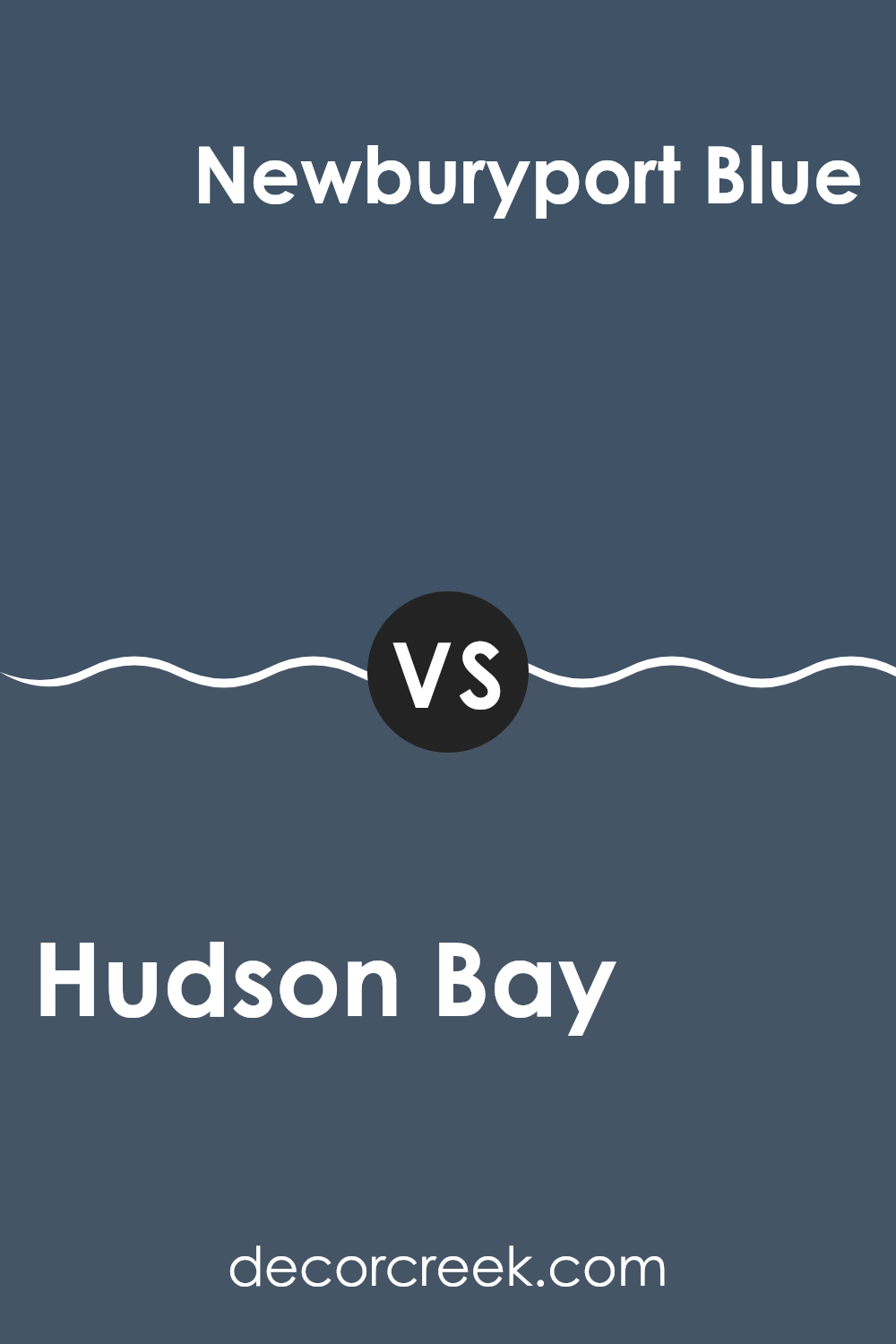
The color Hudson Bay by Benjamin Moore is a calm and inviting shade of blue that leans towards a deep, ocean-like tone. It has a noticeable richness which makes a peaceful background or a bold statement depending on how it’s used alongside other colors.
On the other hand, Newburyport Blue presents a stronger, more assertive blue with a hint of navy. It’s somewhat darker than Hudson Bay, making it a great option for accents or focal points in a room, especially if you’re looking to create a noticeable contrast.
Both colors share a sense of calmness but differ in vibrancy and depth. Hudson Bay, being lighter, could be considered more flexible for larger areas or rooms that need a brighter feel. Newburyport Blue, with its deeper tone, is ideal for adding drama or grounding an otherwise light and airy room. Both can effectively enhance the aesthetic of an area depending on your goals.
You can see recommended paint color below:
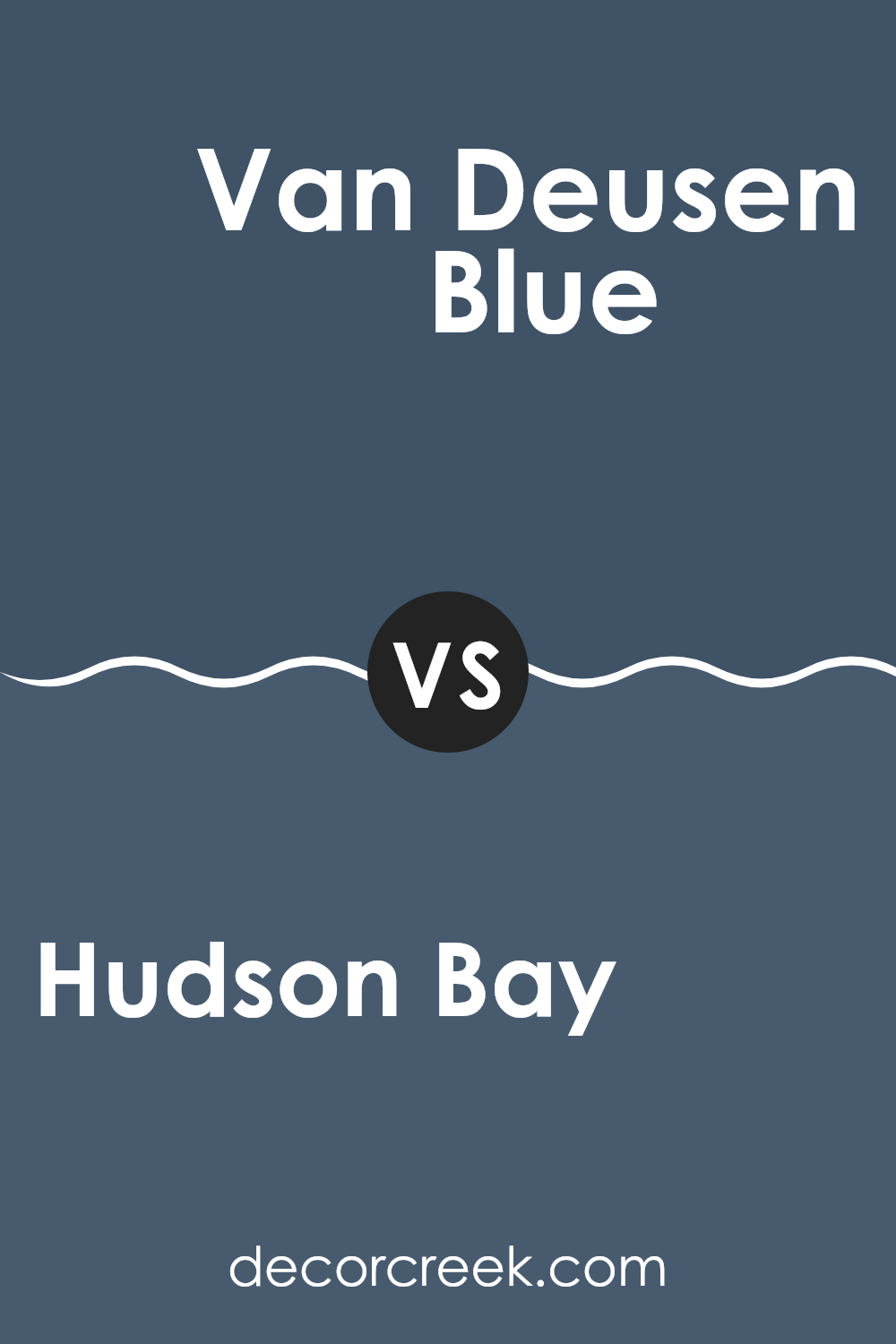
Hudson Bay 1680 by Benjamin Moore vs Van Deusen Blue HC-156 by Benjamin Moore
Hudson Bay and Van Deusen Blue are two colors by Benjamin Moore that offer distinct vibes for any area. Hudson Bay is a deep, dark green with a hint of blue, creating a natural effect like looking into a dense forest. It tends to bring a rich, cozy feeling to rooms, making them feel more secure and sheltered.
On the other hand, Van Deusen Blue is a strong navy blue that gives off a more traditional yet bold look. It has a lasting quality, perfect for adding a touch of classic charm to an area. It’s darker and less green compared to Hudson Bay, providing a sharper and cleaner appearance.
Both colors are quite dark, but Hudson Bay leans more towards green, offering a touch of nature, while Van Deusen Blue leans towards a straightforward, classic blue, often seen as more formal. These colors can effectively style up a room depending on the desired mood, whether it’s the earthy comfort of Hudson Bay or the distinguished vibe of Van Deusen Blue.
You can see recommended paint color below:
After reading all about 1680 Hudson Bay by Benjamin Moore, I’ve learned quite a bit about this particular paint color. It’s clear that Benjamin Moore crafted 1680 Hudson Bay to be unique and calming. This shade of blue has a touch of gray, making it not just pretty, but also really calming. It’s like looking at a stormy sea or the sky on a cloudy day.
I found out that this color fits well in any room you choose. It could be perfect in a living room or a bedroom because it has a way of making areas feel cozy yet stylish at the same time. Also, it matches well with a lot of different colors. Whether it has to stay next to soft whites or bold blacks, 1680 Hudson Bay holds its own and looks great.
What’s really interesting is that it doesn’t just make walls look good. People also use this color on cabinets or even some pieces of furniture. By doing that, they create a fresh, modern look without being too much.
So, if anyone needs a new paint color that is pretty, calming, and can fit right into any room, 1680 Hudson Bay by Benjamin Moore could very well be the perfect choice. It’s simple, beautiful, and can definitely make any area feel more inviting.
decorcreek.com
Ever wished paint sampling was as easy as sticking a sticker? Guess what? Now it is! Discover Samplize's unique Peel & Stick samples.
Get paint samples