Black
Black Blue
Blue Brown
Brown Gray
Gray Green
Green Neutral
 Orange
 White
White Yellow
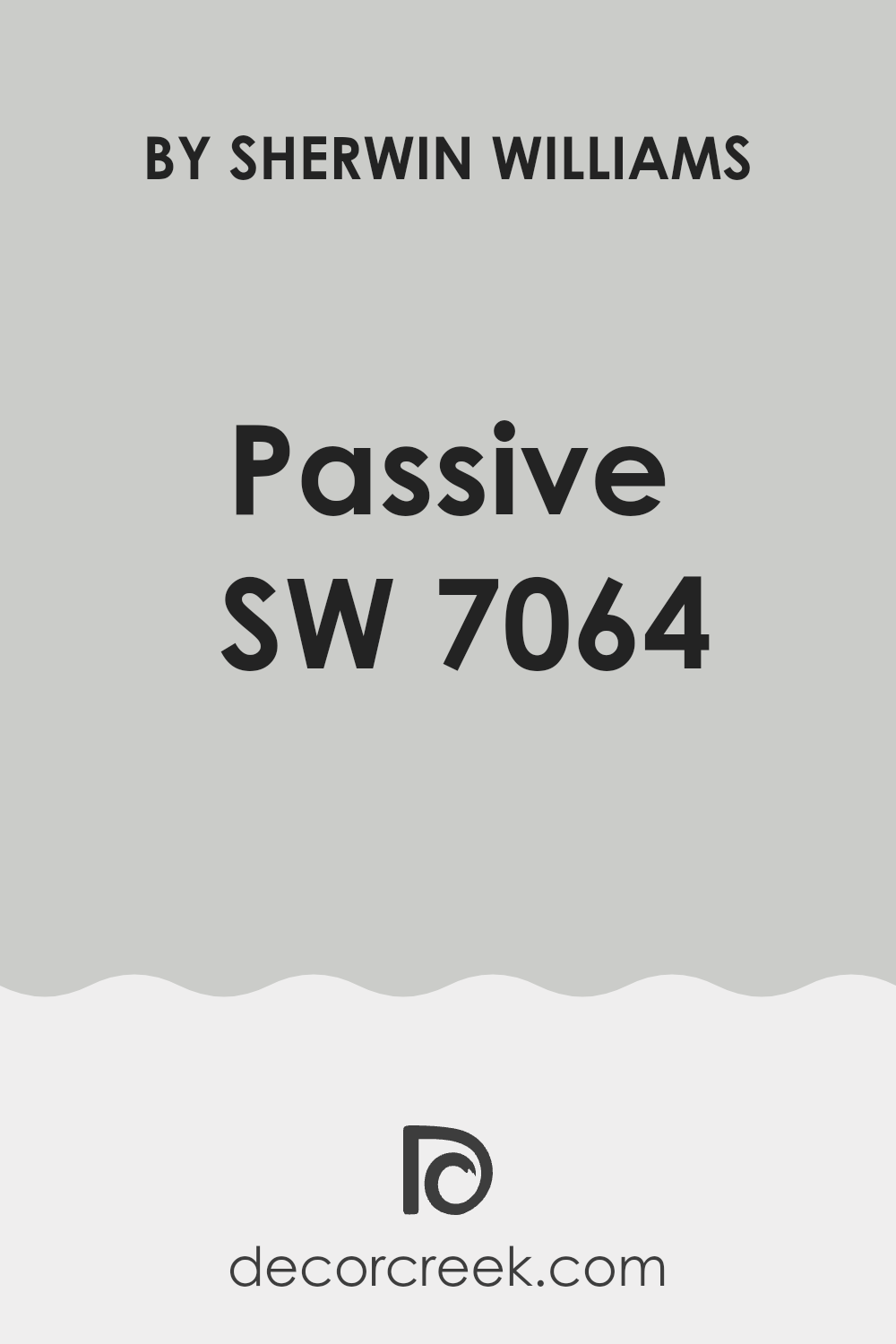
If you’re considering a change in your home’s interior color scheme, SW 7064 Passive by Sherwin Williams could be on your radar. Before you decide on this particular shade of gray, it’s important to understand a few key aspects about it. Passive, a popular choice among homeowners, isn’t just another gray; its unique undertones and light reflectivity help refresh the mood of each room where it’s used.
As someone who has explored countless paint swatches and room transformations, I’ve learned how crucial it is to consider the lighting in your home. Passive could look very different depending on natural light availability or the types of bulbs you use. Also, think about the room’s purpose.
For example, this shade can create a calm backdrop in a bedroom or provide a refined, minimalistic look in a living room. I recommend testing large swatches in different areas of your room at various times of the day. This approach has saved me from color regrets more than once.
It’s always better to see how the color feels with you and your decor throughout the day before making a final decision.
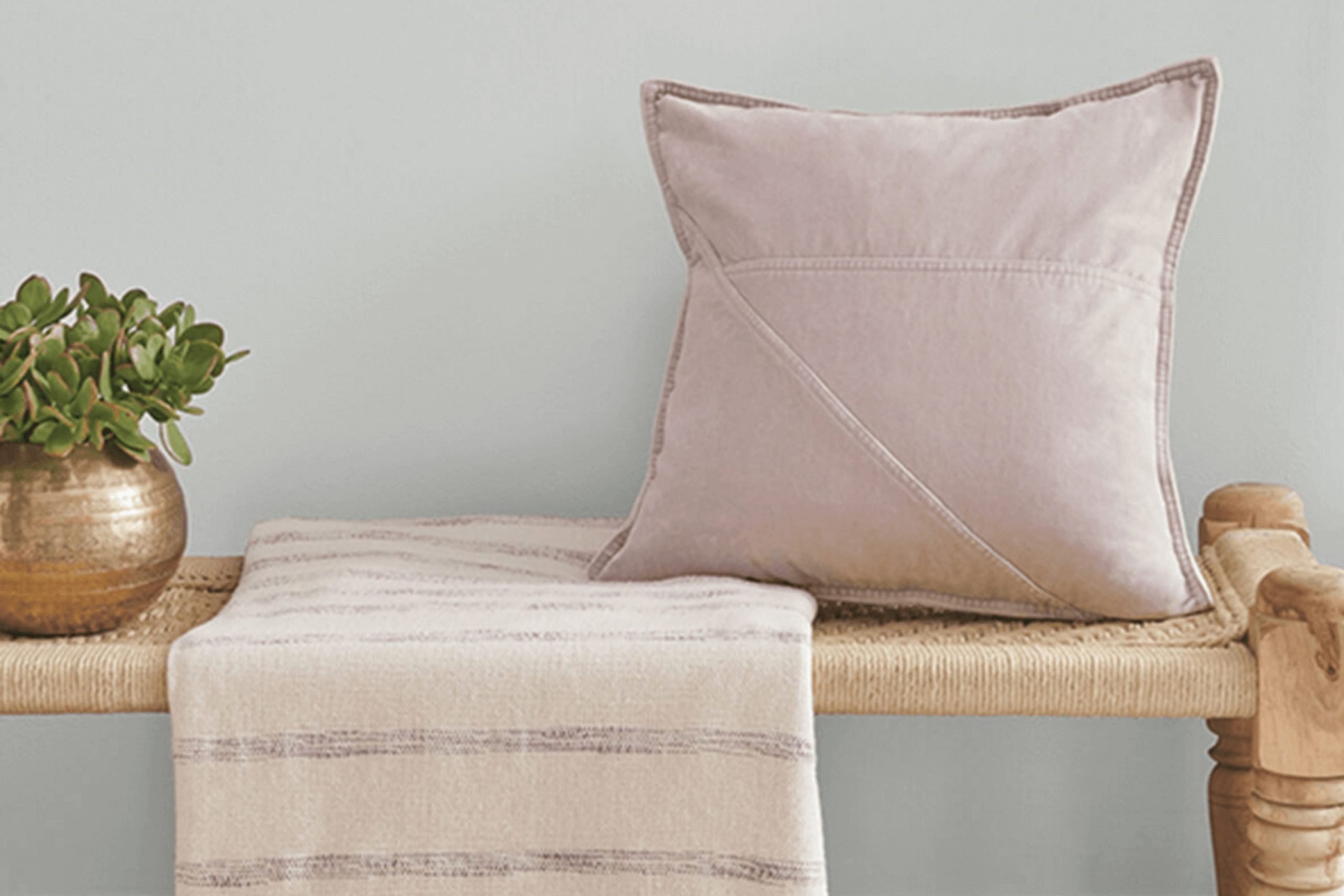
Is Passive SW 7064 Right for My Home?
If you’re considering a change in your home’s interior color scheme, SW 7064 Passive by Sherwin Williams could be on your radar. Before you decide on this particular shade of gray, it’s important to understand a few key aspects about it. Passive, a popular choice among homeowners, isn’t just another gray; its unique undertones and light reflectivity help enhance the mood of each room where it’s used.
As someone who has looked through countless paint swatches and room updates, I’ve learned how crucial it is to consider the lighting in your home. Passive could look very different depending on natural light availability or the types of bulbs you use. Also, think about the room’s purpose.
For example, this shade can create a peaceful backdrop in a bedroom or provide a polished, minimalistic look in a living room. I recommend testing large swatches in different areas of your room at various times of the day. This approach has saved me from color regrets more than once. It’s always better to see how the color feels with you and your decor throughout the day before making a final decision.
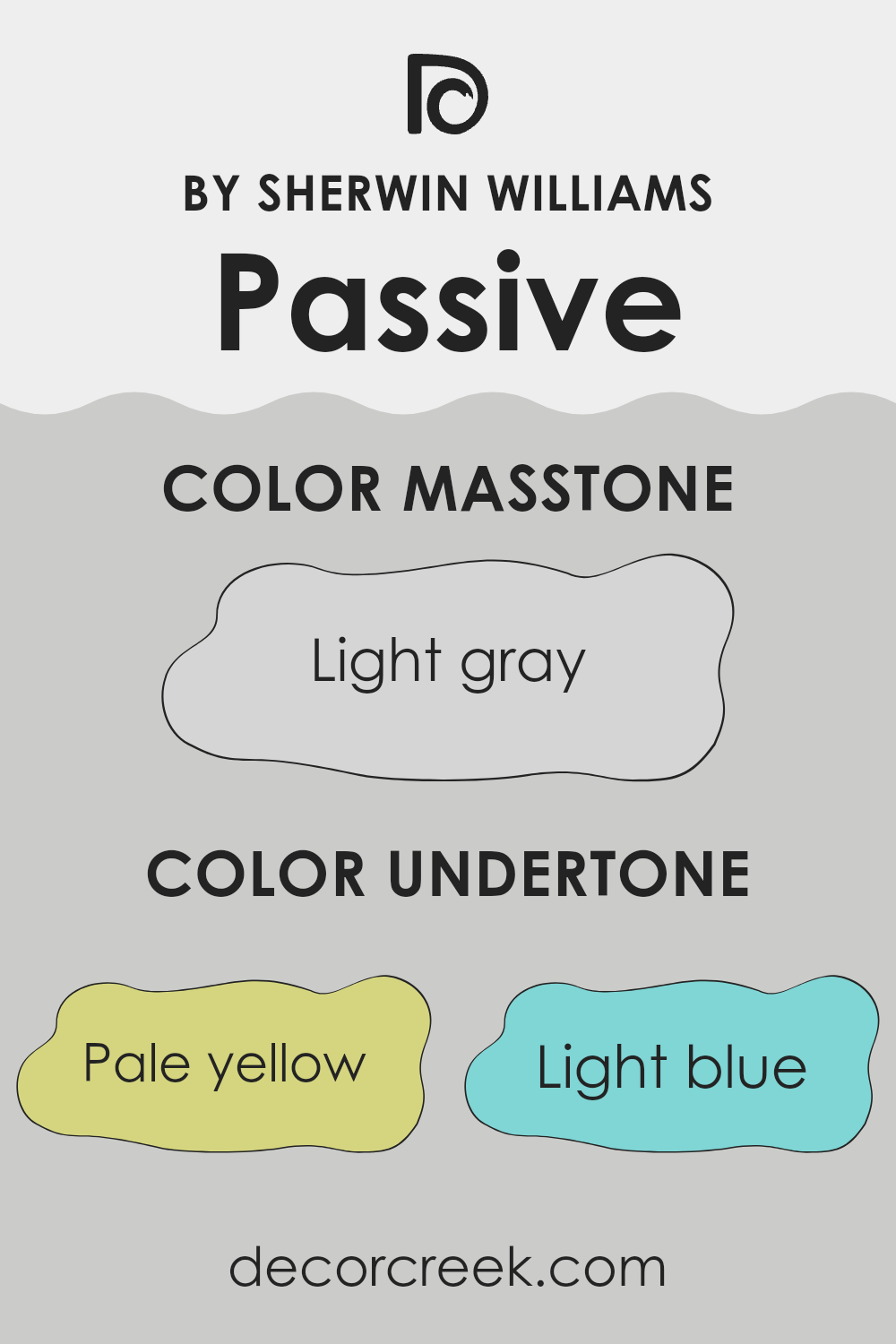
What are the right undertones of Passive SW 7064 ?
Passive is a flexible gray paint that can subtly change its appearance depending on the light and the colors around it, thanks to its complex undertones. Understanding the undertones in paint can greatly help in using them well, as they shape how we see the main color.
For Passive, these undertones include pale yellow, light blue, light purple, mint, pale pink, lilac, and gray. Each undertone plays a role in how the color appears under different lighting conditions. For instance, in a room with a lot of natural light, the pale yellow undertone might make the color appear warmer, whereas in a room with cooler light, the light blue or lilac might stand out, giving the walls a cooler appearance.
On interior walls, these undertones make Passive a very adaptable color that can work well with many décor styles and color schemes. If the room has elements like natural wood or warm-colored fabrics, the pale yellow or pale pink undertone might become more noticeable, creating a cozy feel. In contrast, with modern furniture or metal accents, the light blue and lilac undertones might come forward, supporting a more modern look.
In summary, the undertones in this gray paint make it highly adaptable and suited for many settings, allowing it to blend in softly or stand out as needed to improve the overall look of a room.
Best Coordinating Colors to use with Passive SW 7064 by Sherwin Williams this year.
Coordinating colors are hues that complement each other and work well together when used in the same room, creating a balanced and pleasing atmosphere. These colors are chosen for their ability to enhance the main color without feeling overpowering, giving a steady and comfortable visual effect.
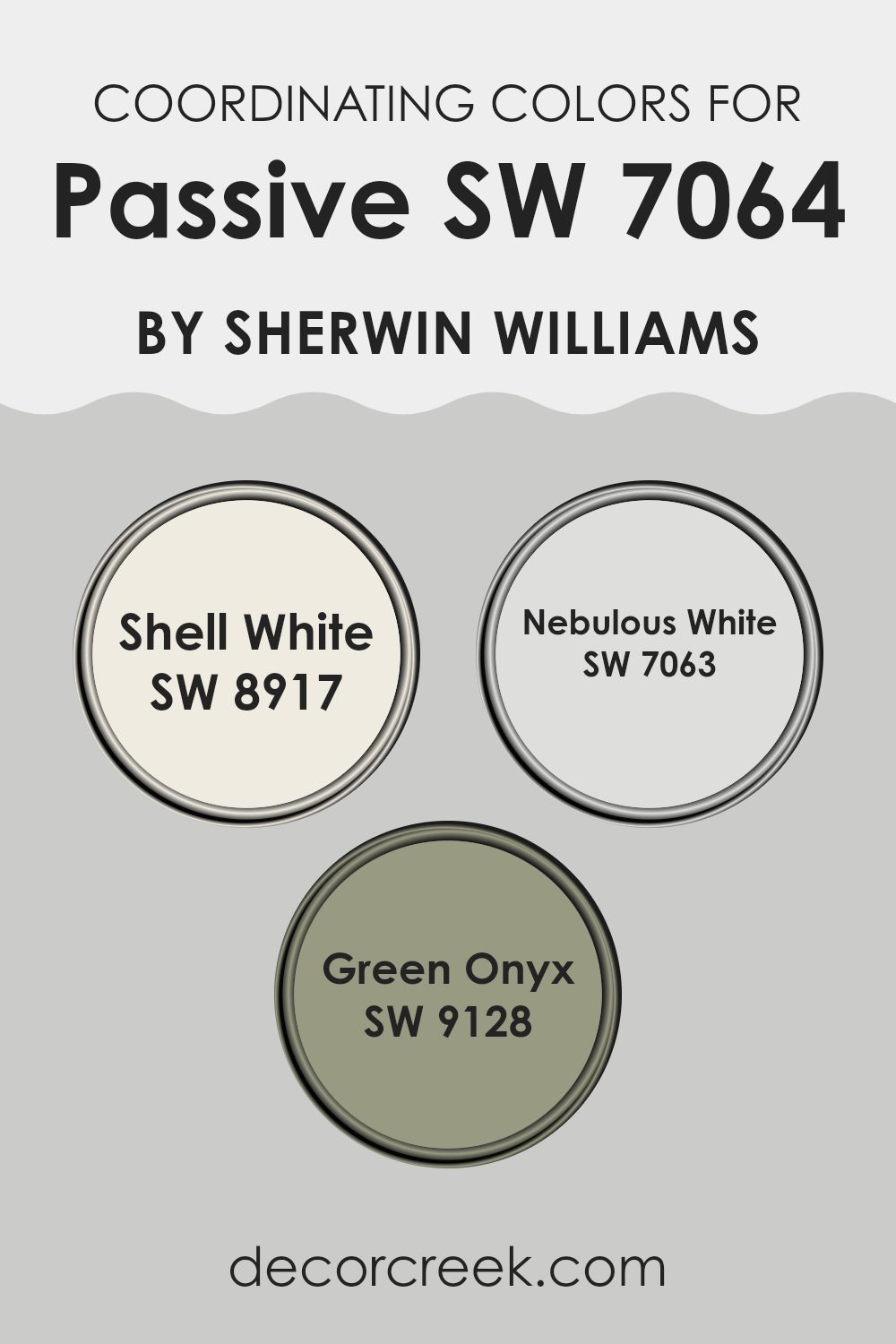
In the case of Passive by Sherwin Williams, a muted gray, its coordinating colors include Shell White, Nebulous White, and Green Onyx. Each of these colors supports the cool tone of Passive, allowing for a cohesive yet gently varied palette.
Shell White is a soft, warm white that adds light to a room, making it a great choice for trim or ceilings when paired with Passive to keep a bright, open feel. Nebulous White leans toward a grayish-white, offering a slightly deeper contrast while still keeping a clean and fresh look, perfect for larger wall areas or furniture pieces. Lastly, Green Onyx brings in a hint of soft green, adding a natural touch of color that can give energy to a room without overpowering the gentle tone of Passive. Together, these colors help shape a smooth visual flow in any living room.
You can see recommended paint colors below:
Trendy Trim Colors of Passive SW 7064 by Sherwin Williams to use this year.
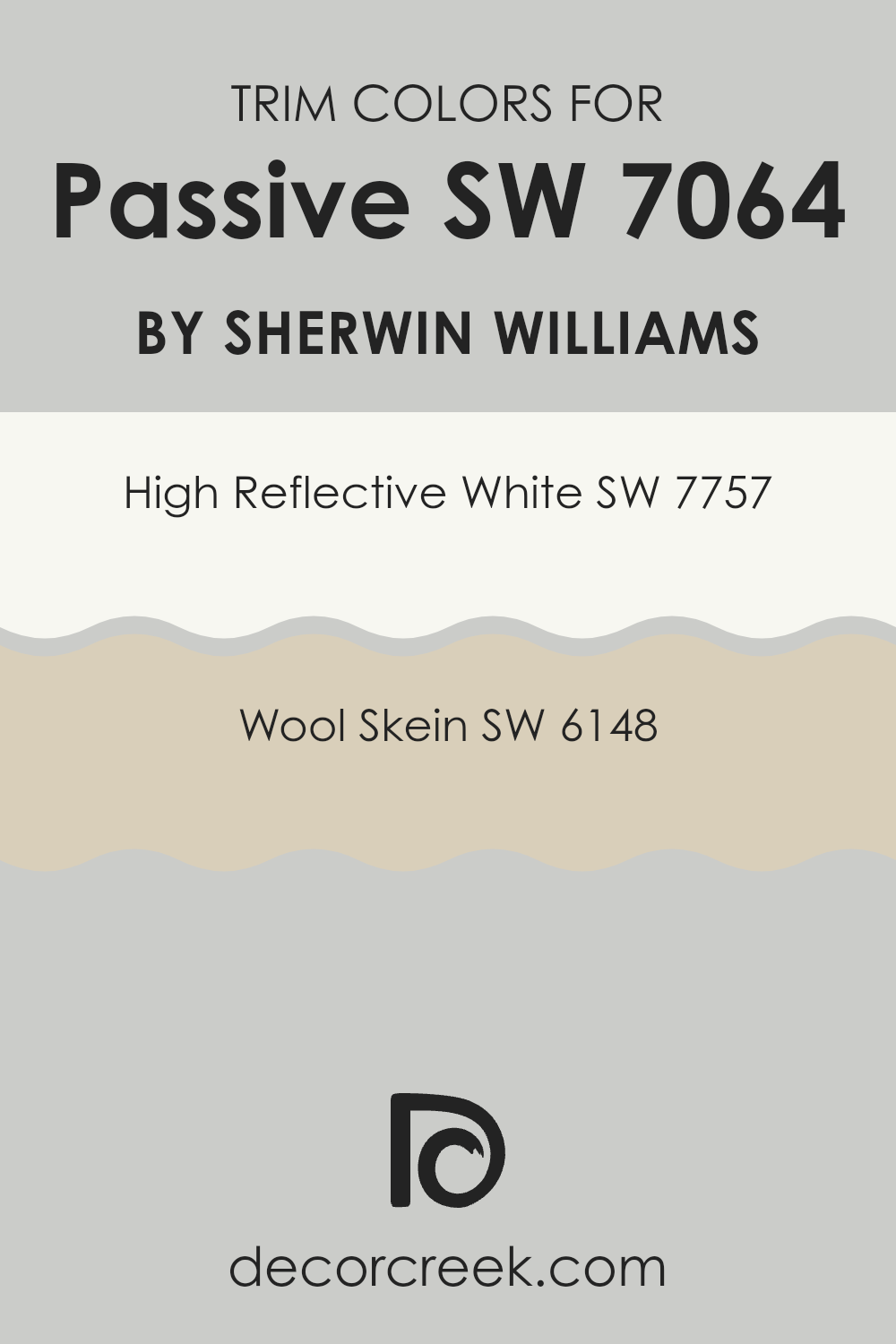
Trim colors are used to highlight architectural details and frame areas like doors, windows, and baseboards, standing out from the wall color to add depth and clear lines to a room. With a subtle and neutral shade like SW 7064 Passive by Sherwin-Williams, choosing the right trim colors is important to enhance the overall look without feeling overpowering next to the main color. SW 7757 High Reflective White and SW 6148 Wool Skein are strong choices for this purpose, as they both coordinate well while offering different effects.
SW 7757 High Reflective White is a bright, clean white that creates a crisp contrast with SW 7064 Passive. This trim color gives a fresh and sharp edge to the muted gray, outlining features with clarity and light.
On the other hand, SW 6148 Wool Skein is a warm, soft beige that creates a smoother, more blended shift between the trim and the wall color. Its natural tone works well with Passive by adding warmth and gentle definition, making it a lovely option for a cozy and welcoming feel.
You can see recommended paint colors below:
Evergreen Colors Similar to Passive SW 7064 by Sherwin Williams
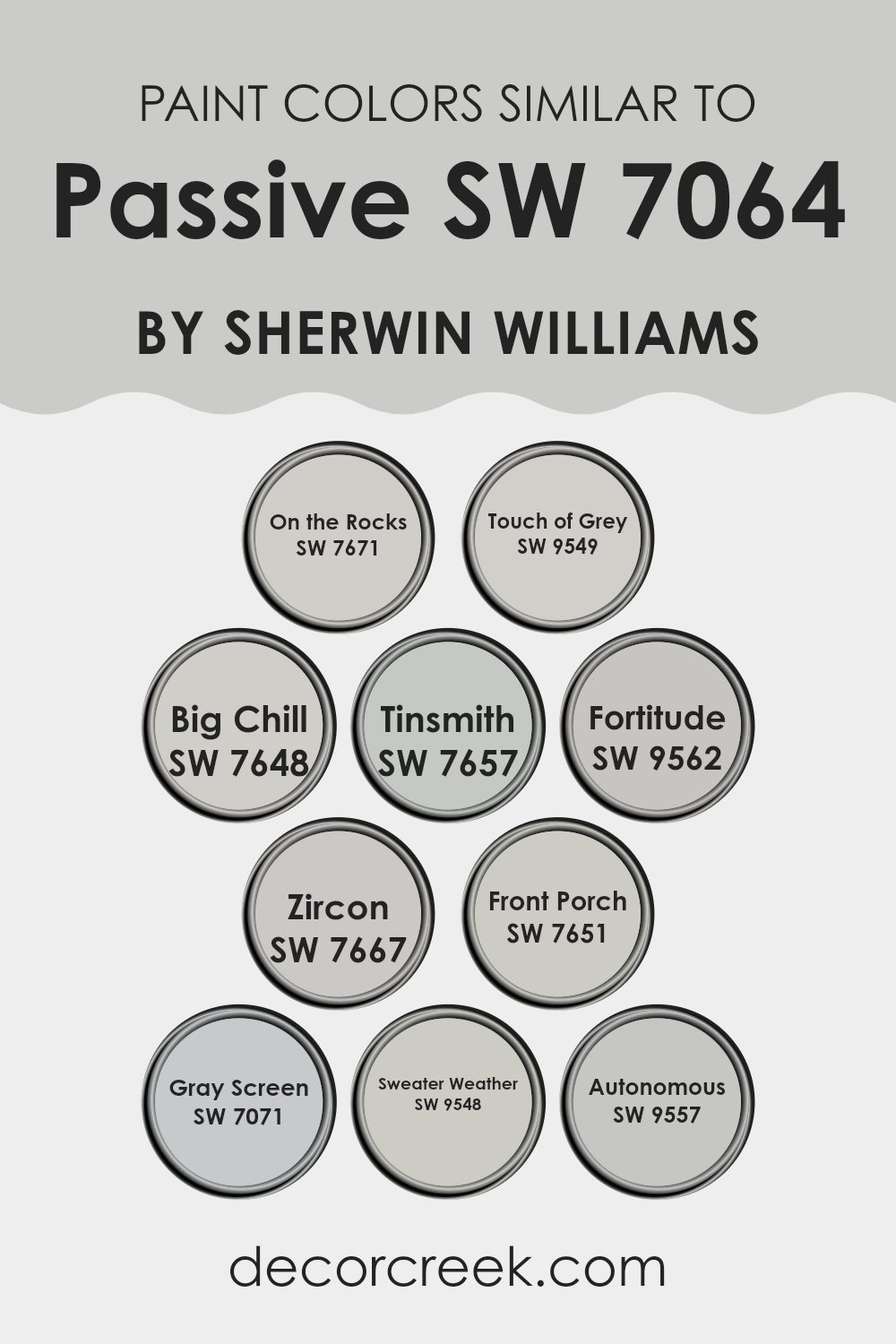
Choosing similar colors when designing a room can create a balanced and pleasing look. Similar colors, often called analogous colors, sit close to each other on the color wheel, helping shape a smooth and gentle shift from one shade to another.
This is helpful when aiming for a calm and cohesive setting, as too many strong contrasts may make a room feel overwhelming. For example, when working with a base color like the cool gray of Passive SW 7064 by Sherwin Williams, adding shades such as SW 7671 – On the Rocks, a soft light gray, or SW 9549 – Touch of Grey, another subtle gray with a calming tone, helps keep the mood steady and connected.
Continuing this direction, SW 7648 – Big Chill offers another light gray with a fresh touch, while SW 7657 – Tinsmith and SW 9562 – Fortitude bring slightly deeper grays that add depth without feeling overwhelming. SW 7667 – Zircon is a muted, airy gray that blends easily into this group.
For those wanting a lighter feel, SW 7651 – Front Porch adds an open and breezy quality. SW 7071 – Gray Screen reflects the look of an overcast sky, great for those who like a medium shade. In the same way, SW 9548 – Sweater Weather gives a cozy and welcoming mood with quiet refinement. Finally, SW 9557 – Autonomous stands out with a bold yet subtle presence, helping the design feel unified and interesting. Together, these colors support a look that feels connected and calming, perfect for creating a comfortable, stylish room.
You can see recommended paint colors below:
- SW 7671 On the Rocks
- SW 9549 Touch of Grey
- SW 7648 Big Chill
- SW 7657 Tinsmith
- SW 9562 Fortitude
- SW 7667 Zircon
- SW 7651 Front Porch
- SW 7071 Gray Screen
- SW 9548 Sweater Weather
- SW 9557 Autonomous
Colors that Go With Passive SW 7064 by Sherwin Williams
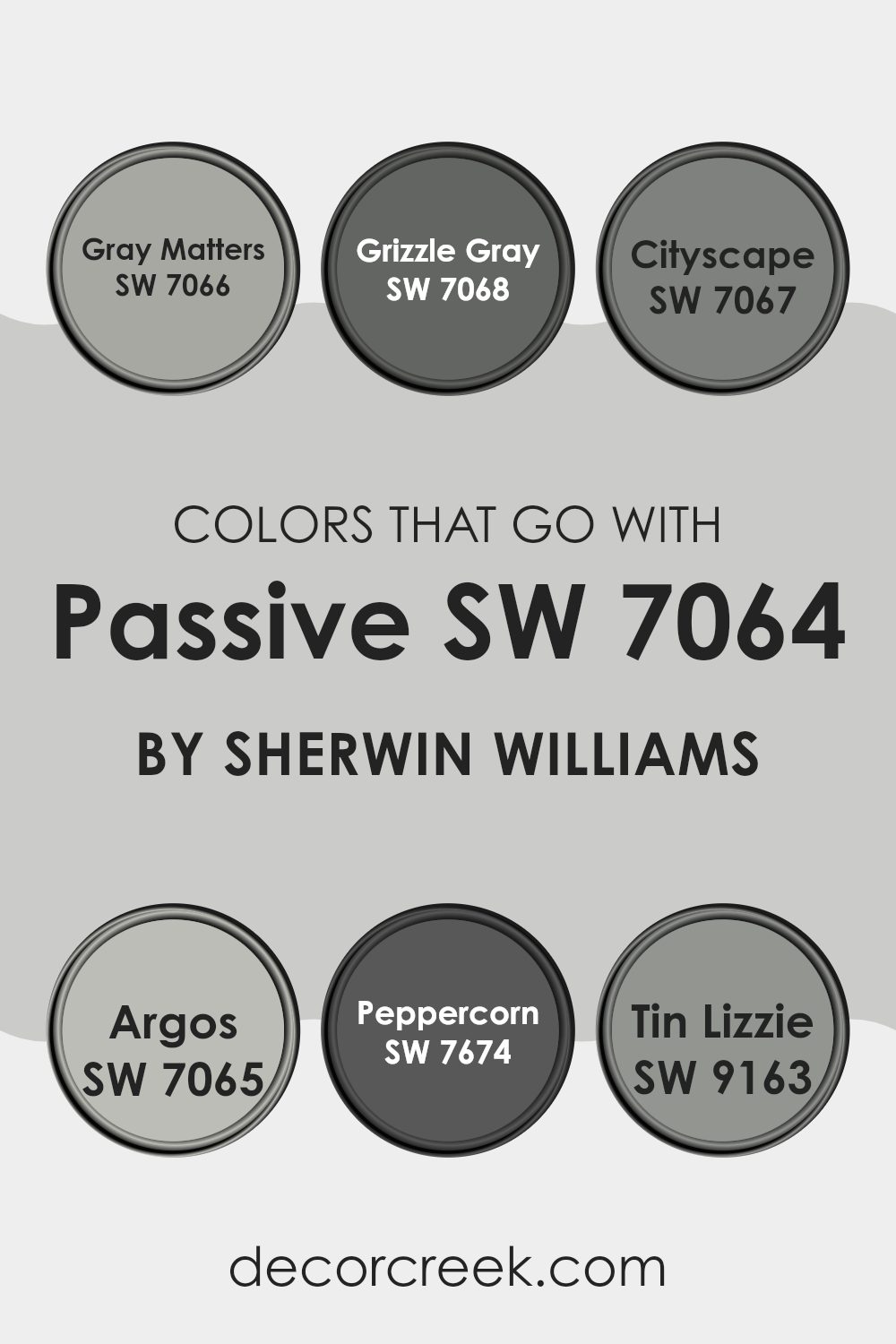
Choosing the right colors to pair with Passive SW 7064 by Sherwin Williams can greatly shape the feel and function of your room. Complementary colors like Gray Matters, Grizzle Gray, Cityscape, Argos, Peppercorn, and Tin Lizzie each play a special role in supporting the mood of the areas where they are used. By selecting colors that work well with Passive, it becomes easier to build a cohesive look that moves smoothly from one room to another while still allowing for clear yet balanced design choices.
For example, SW 7066 Gray Matters is a slightly softer gray that gives a gentle contrast to Passive, making it ideal for creating a light difference without feeling overwhelming. SW 7068 Grizzle Gray offers a deeper tone that can create a strong impact and a bold presence in a room, making it perfect for accent walls or furniture pieces.
SW 7067 Cityscape, with its mid-tone gray, is flexible enough for both modern and traditional rooms, offering a balance that is not too light or too dark. SW 7065 Argos is a cooler gray that adds a crisp feeling to a room. SW 7674 Peppercorn is a near-black shade that brings depth and drama, perfect for making a bold statement or drawing attention to certain areas. Lastly, SW 9163 Tin Lizzie features a steel-like gray that gives a modern industrial feel, ideal for clean rooms that need a simple yet strong touch. Together, these colors support Passive by offering a wide range of choices that can fit many decorating styles, helping create both harmony and personal style.
You can see recommended paint colors below:
- SW 7066 Gray Matters
- SW 7068 Grizzle Gray
- SW 7067 Cityscape
- SW 7065 Argos
- SW 7674 Peppercorn
- SW 9163 Tin Lizzie
Passive SW 7064 by Sherwin Williams vs Fortitude SW 9562 by Sherwin Williams
Passive SW 7064 and Fortitude SW 9562, both by Sherwin Williams, bring clearly different moods to interior rooms. Passive is a light gray with a soft cool undertone, making it a flexible choice for many areas of the home.
It’s gentle enough not to feel overwhelming in a room, yet clear enough to give a modern and clean look. In contrast, Fortitude is a much darker shade that leans toward deep charcoal. This color can make a bold statement in a room, adding a sense of strength and stability.
Fortitude works well in areas that benefit from a dramatic touch, such as accent walls or in rooms with plenty of natural light so it doesn’t feel too closed in. When comparing the two, Passive is a better fit for those who like a light and open feel, while Fortitude is ideal for anyone wanting a strong and noticeable presence in their color palette.
You can see recommended paint color below:
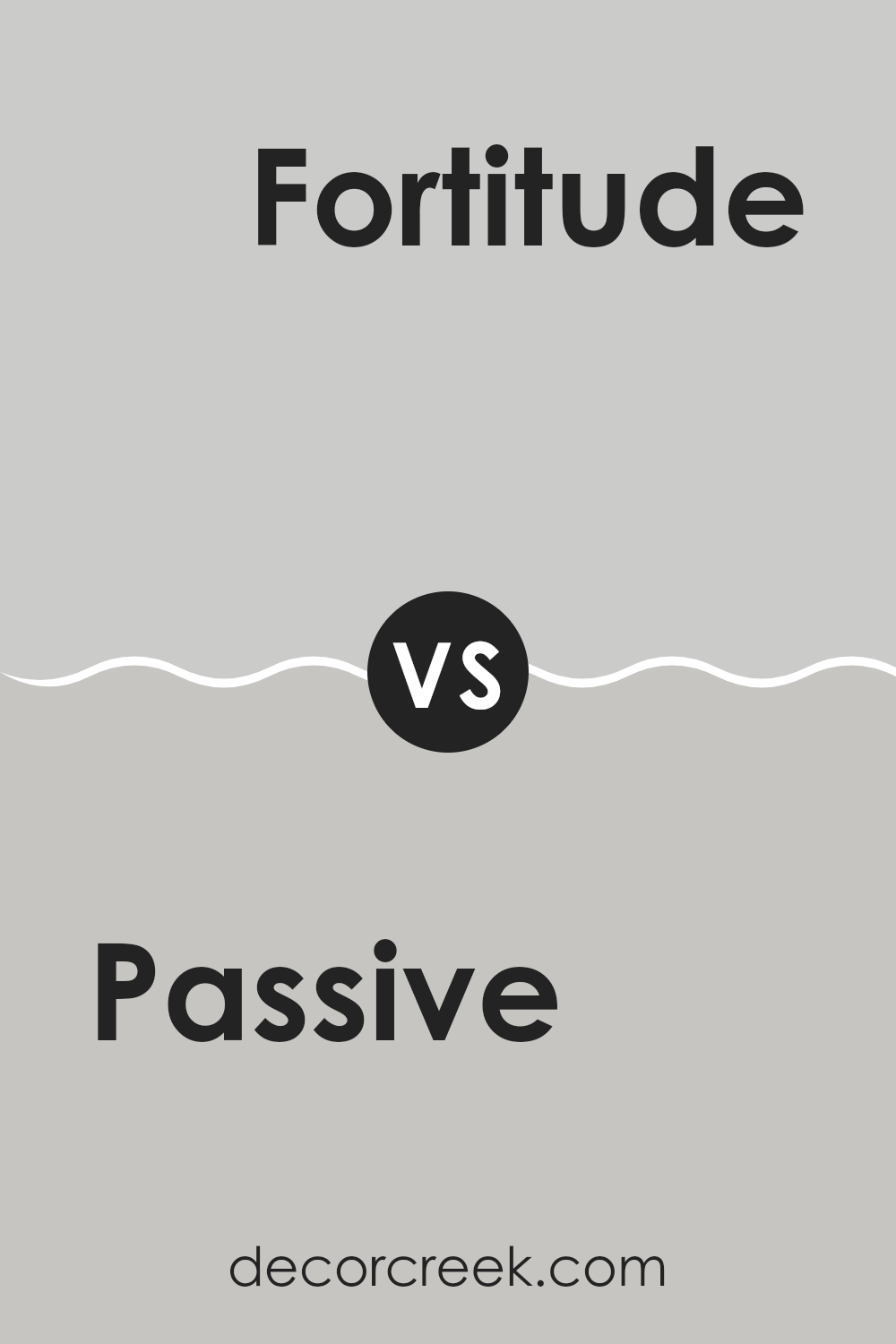
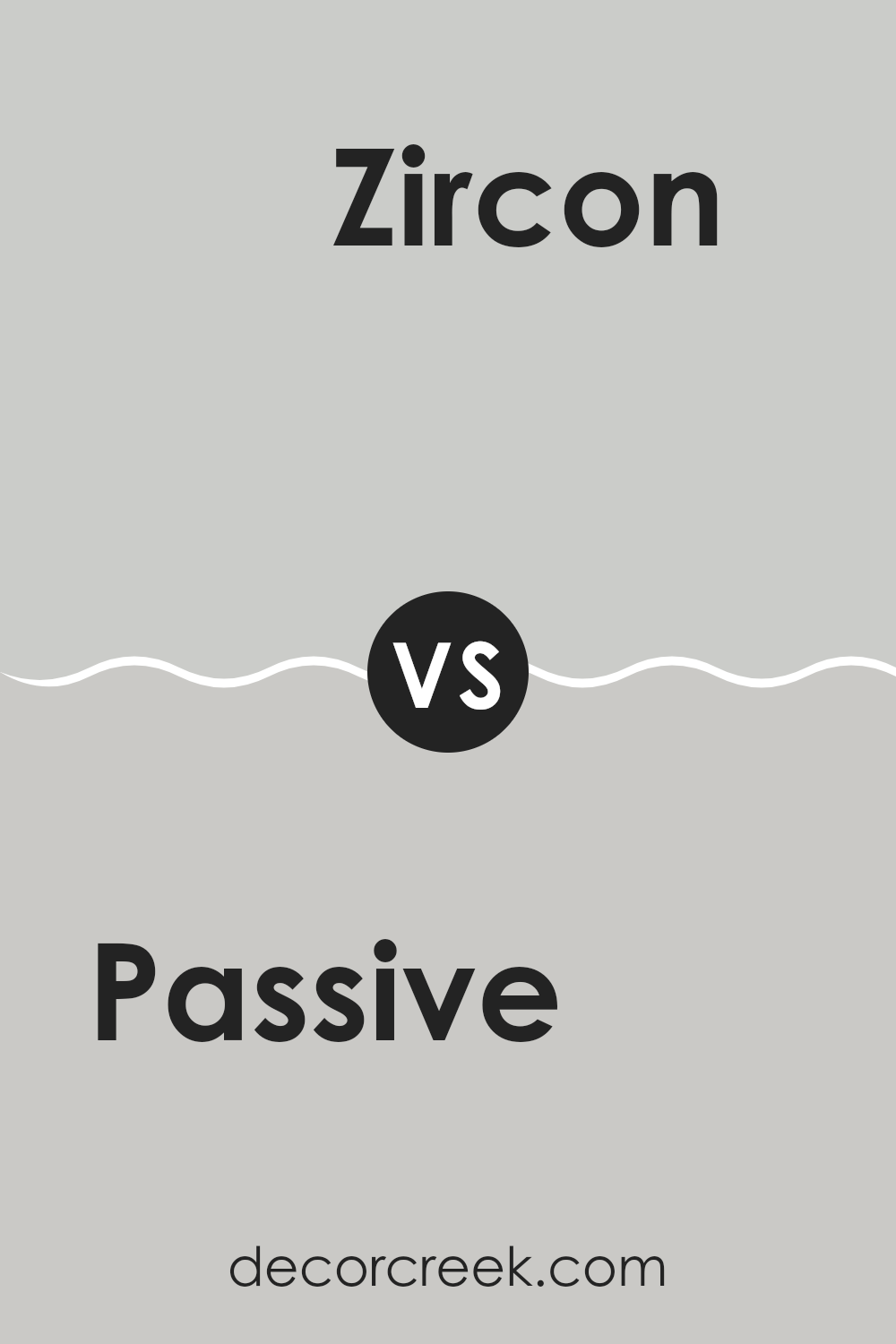
Passive SW 7064 by Sherwin Williams vs Zircon SW 7667 by Sherwin Williams
The main color, Passive, and the second color, Zircon, are both created by Sherwin Williams and share a modern, neutral palette with clear differences. Passive is a soft, light grey that feels clean and calming.
It’s flexible enough to work in many rooms, helping create a bright and open feel. In contrast, Zircon is slightly darker with a cool, steely undertone. This gives Zircon the ability to shape a more defined room while still keeping a light and welcoming feel.
Both colors work well together, with Passive often used on larger areas or as a base, and Zircon serving as a strong accent for details or smaller sections. This pairing can enhance a room’s look without feeling overpowering with too much color.
You can see recommended paint color below:
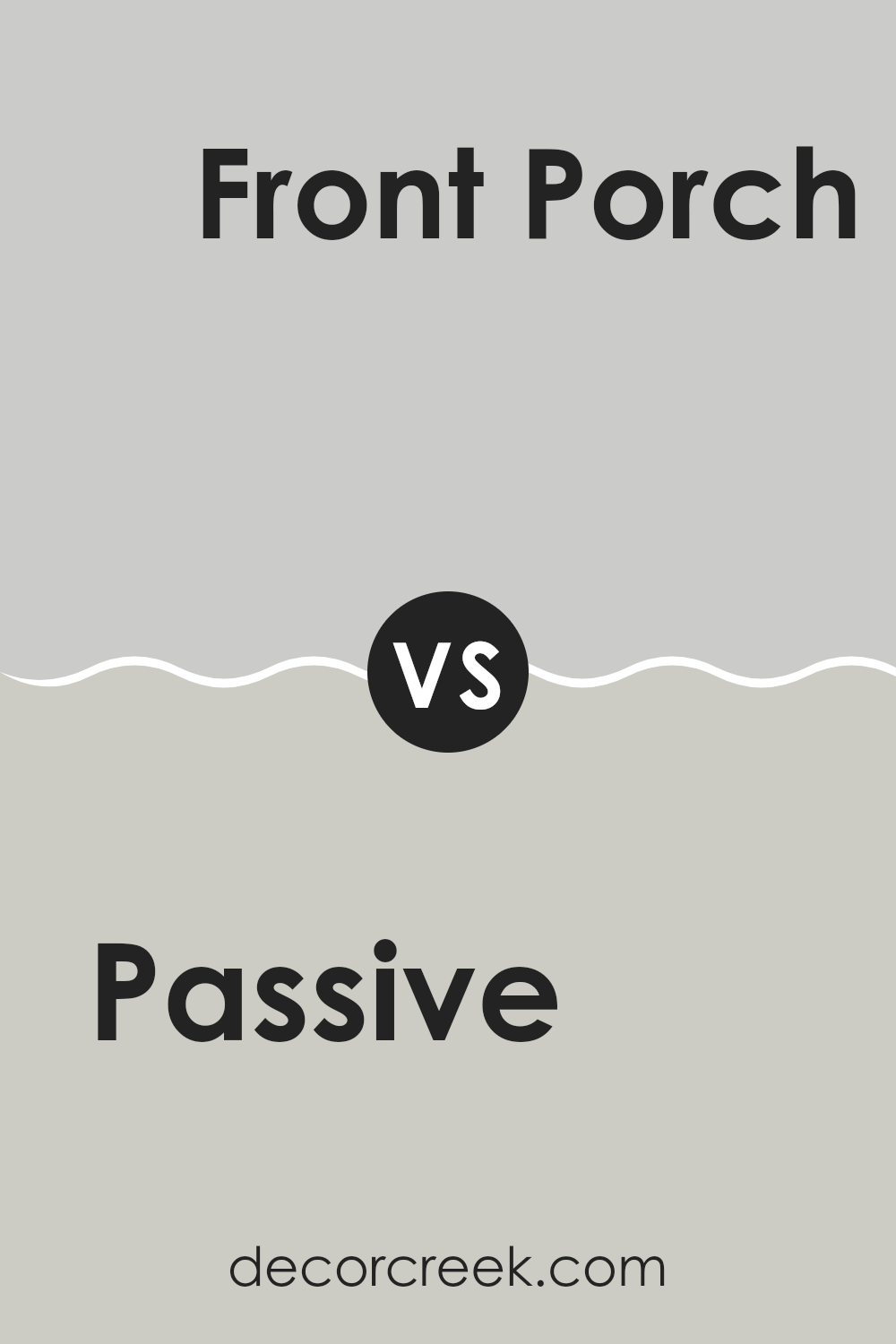
Passive SW 7064 by Sherwin Williams vs Front Porch SW 7651 by Sherwin Williams
The main color, Passive, is a cool gray that shows a soft hint of blue in certain lighting. It’s quite neutral, making it a flexible choice for any room in your home. It pairs well with many décor styles and helps enhance a room with a clean, fresh look.
In contrast, Front Porch is also a gray shade but carries a touch of green. This color is slightly lighter than Passive and gives rooms a calm, open feel. Its green undertone adds a natural, almost earthy mood, which can make rooms feel more relaxed and comfortable.
When comparing the two, Passive may be better for those who want a classic gray that feels simple yet stylish. Front Porch, with its hint of green, is ideal for someone who wants to bring in a soft natural touch. Both colors keep a modern look and can be used in many rooms to create a welcoming setting.
You can see recommended paint color below:
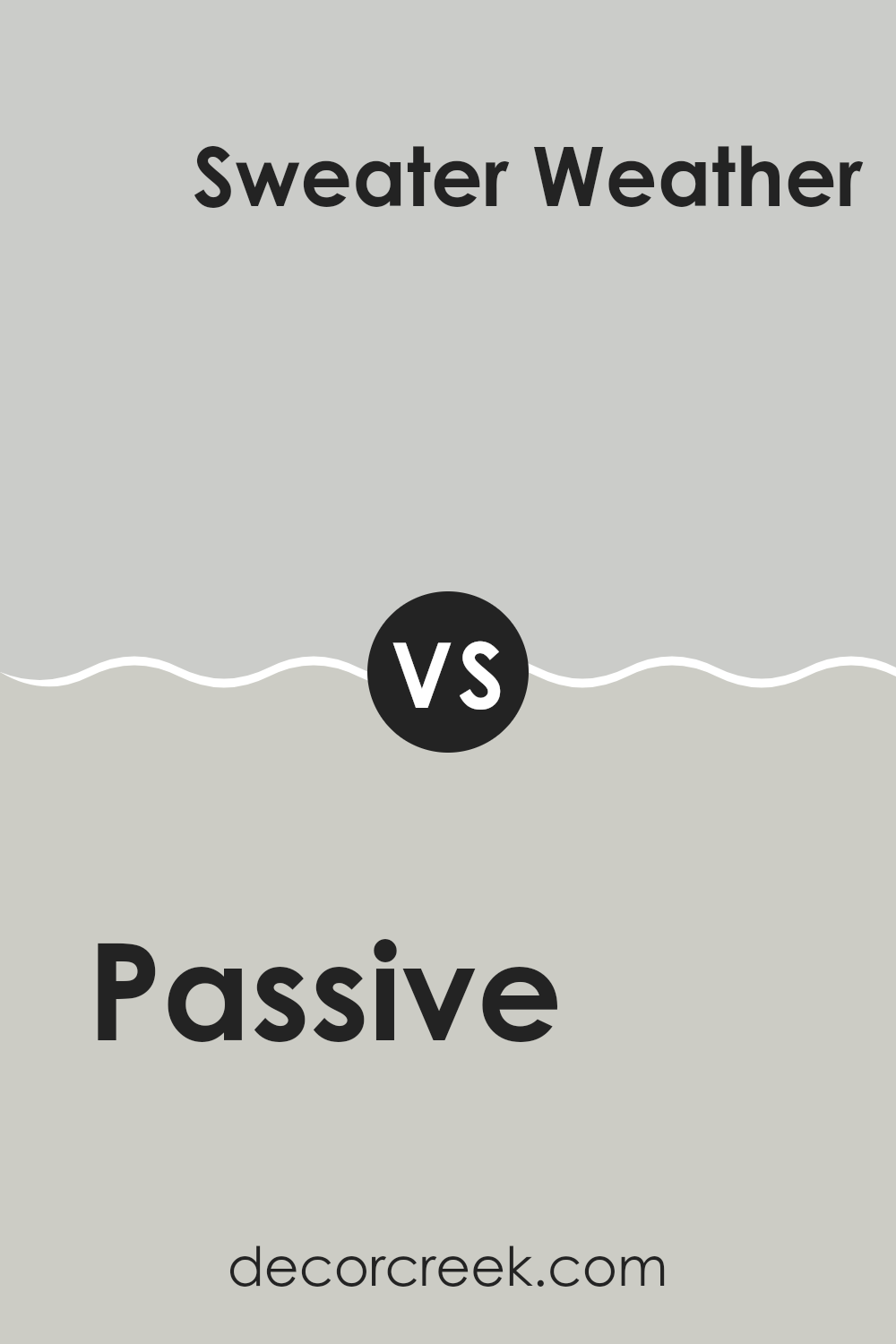
Passive SW 7064 by Sherwin Williams vs Sweater Weather SW 9548 by Sherwin Williams
Passive SW 7064 is a soft gray with gentle blue undertones, giving it a calm and comforting feel, perfect for rooms where you want a peaceful mood. In contrast, Sweater Weather SW 9548 is a deeper gray that leans to the cooler side, similar to the cozy feel of a thick knit sweater on a cold day.
While both shades are gray, Passive is lighter, which helps small rooms feel bigger and more open. Sweater Weather, being darker, is ideal for creating a cozy and welcoming atmosphere in larger rooms or as an accent wall to add depth.
Both colors fit well in modern décor styles and can be paired with many other shades. Passive brings a lighter and fresher look, while Sweater Weather gives a stronger and more grounded feeling.
You can see recommended paint color below:
Passive SW 7064 by Sherwin Williams vs Big Chill SW 7648 by Sherwin Williams
Passive SW 7064 by Sherwin Williams is a soft gray with a gentle hint of blue undertone, giving it a cool and calming mood. It works well in rooms where you want a neutral backdrop that still feels welcoming. This shade is flexible and pairs nicely with many décor styles, from modern to traditional.
In contrast, Big Chill SW 7648 is also a gray, but it has a lighter tone than Passive. Big Chill leans closer to a true gray without strong undertones, which makes it look clean and crisp. This color is great for shaping a bright and open feel in a room, especially in well-lit areas.
Both shades are strong choices for those who like neutral palettes. Passive adds a touch more depth with its blue undertones, while Big Chill keeps the look simple with its clear gray character. Depending on the mood you want to shape, either one can be the right choice.
You can see recommended paint color below:
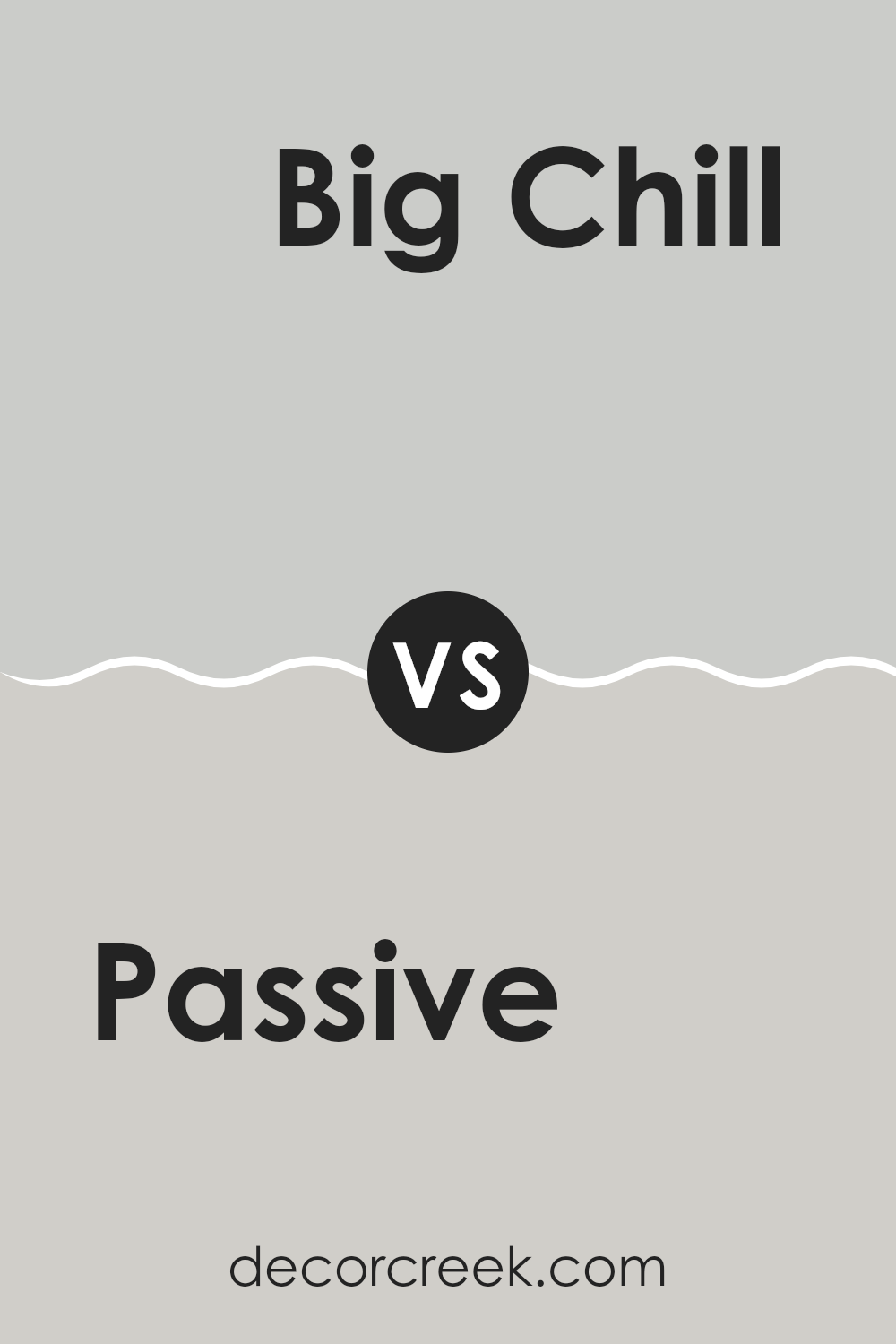
Passive SW 7064 by Sherwin Williams vs Autonomous SW 9557 by Sherwin Williams
Passive SW 7064 by Sherwin Williams is a cool gray shade with soft blue undertones, giving it a calm and neutral mood. It’s a flexible color that works well in many rooms, helping shape a relaxed setting.
In contrast, Autonomous SW 9557 is a darker gray that leans slightly toward green. This shade creates a bolder statement while still feeling grounded and controlled, making it a strong option for accent walls or larger areas that benefit from more depth.
Both colors reflect a modern look, but while Passive feels lighter and more open, Autonomous brings a stronger and more solid presence. Each shade can suit different décor styles and personal tastes, depending on the mood you want to create in your room.
You can see recommended paint color below:
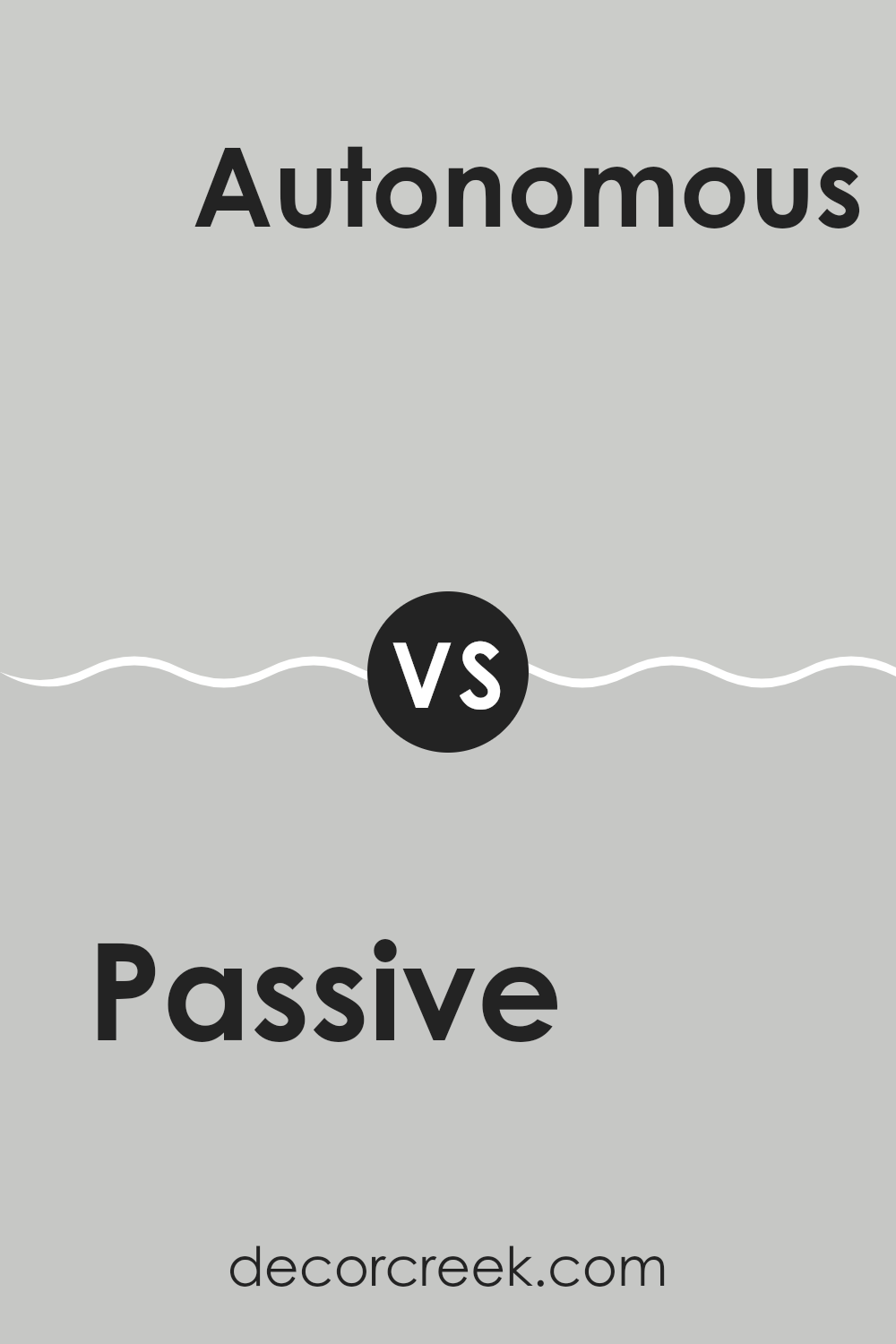
Passive SW 7064 by Sherwin Williams vs Touch of Grey SW 9549 by Sherwin Williams
The main color, Passive by Sherwin Williams, and the second color, Touch of Grey, are both muted grays but with different undertones and moods. Passive has a cooler undertone, which can make rooms feel fresh and modern. It works well in a room with plenty of natural light, as it keeps its crisp look without feeling too sharp.
In contrast, Touch of Grey is a warmer gray. This shade can add a more welcoming and cozy feeling to a room, making it a lovely choice for living rooms or bedrooms where comfort matters most.
Even though both are gray, the shift between cool and warm undertones gives each one a clear personality that fits different décor styles and tastes. Whether you want a fresh, cool mood or a warmer, cozy setting, each shade has its own role in home design.
You can see recommended paint color below:
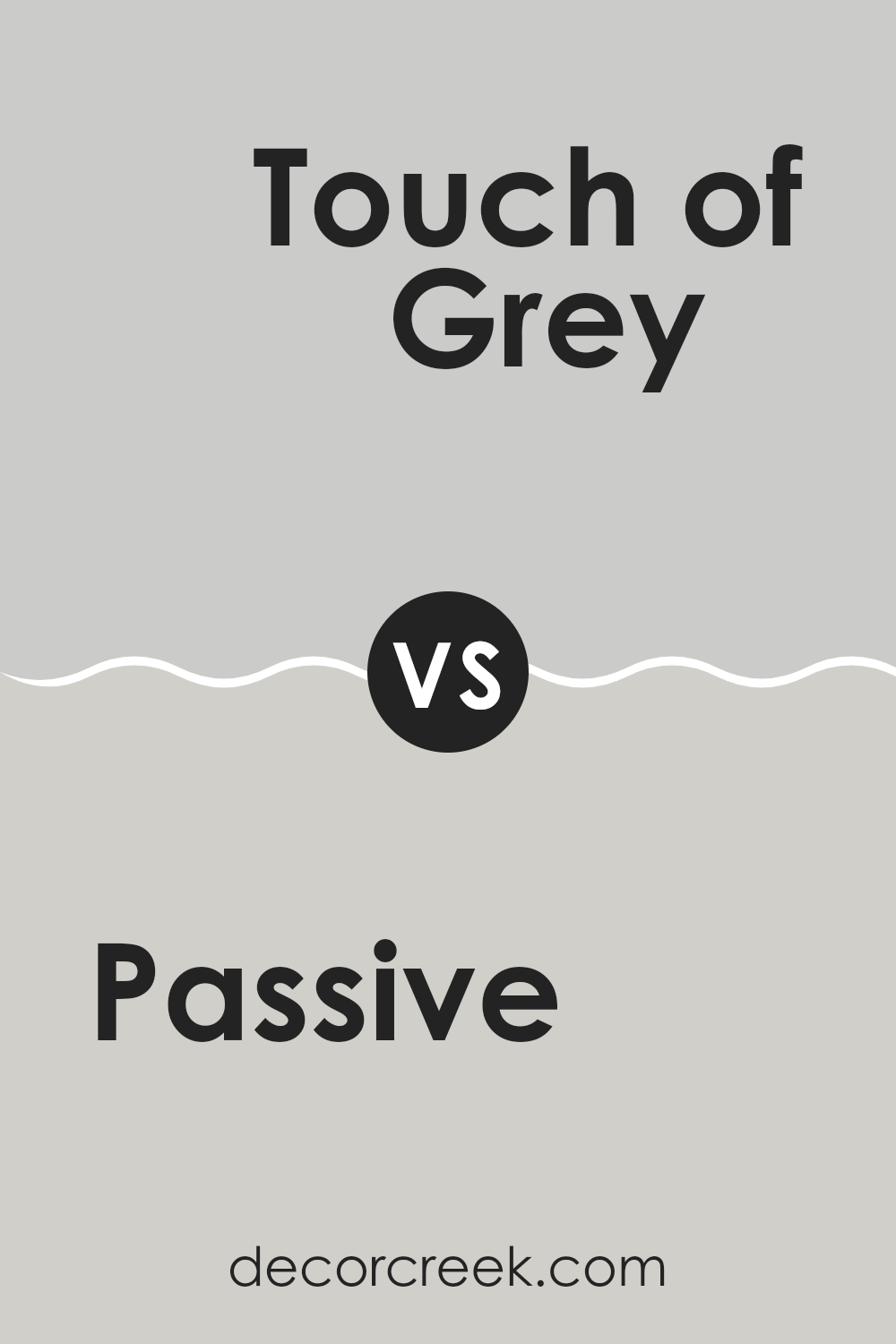
Passive SW 7064 by Sherwin Williams vs Gray Screen SW 7071 by Sherwin Williams
The main color, Passive, and the second color, Gray Screen, both by Sherwin Williams, show soft differences in tone that can shape the mood of a room. Passive is a light gray with a gentle hint of blue, giving it a cooler touch.
This makes it a strong choice for rooms that need a calm and neutral backdrop with a slightly crisp feel. Gray Screen, in contrast, is also a light gray but carries a more noticeable blue undertone, which makes it look even cooler.
This shade can give a room a fresher and more open mood, ideal for a modern style or pairing with simple décor. Both colors perform well in bright areas, helping enhance the room with their light-reflecting nature. Choosing between them comes down to how much cool blue you want to see—more visible in Gray Screen and softer in Passive.
You can see recommended paint color below:
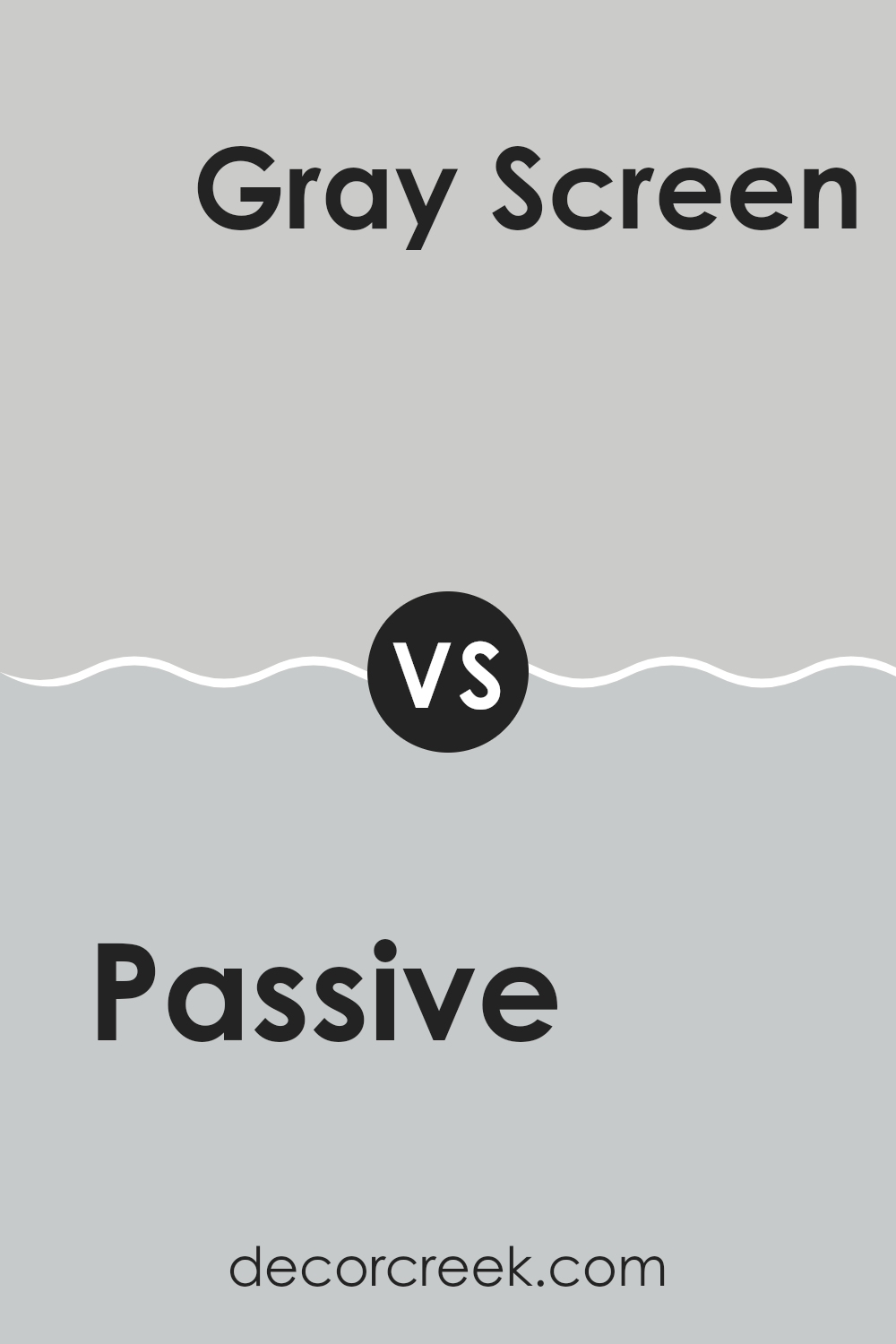
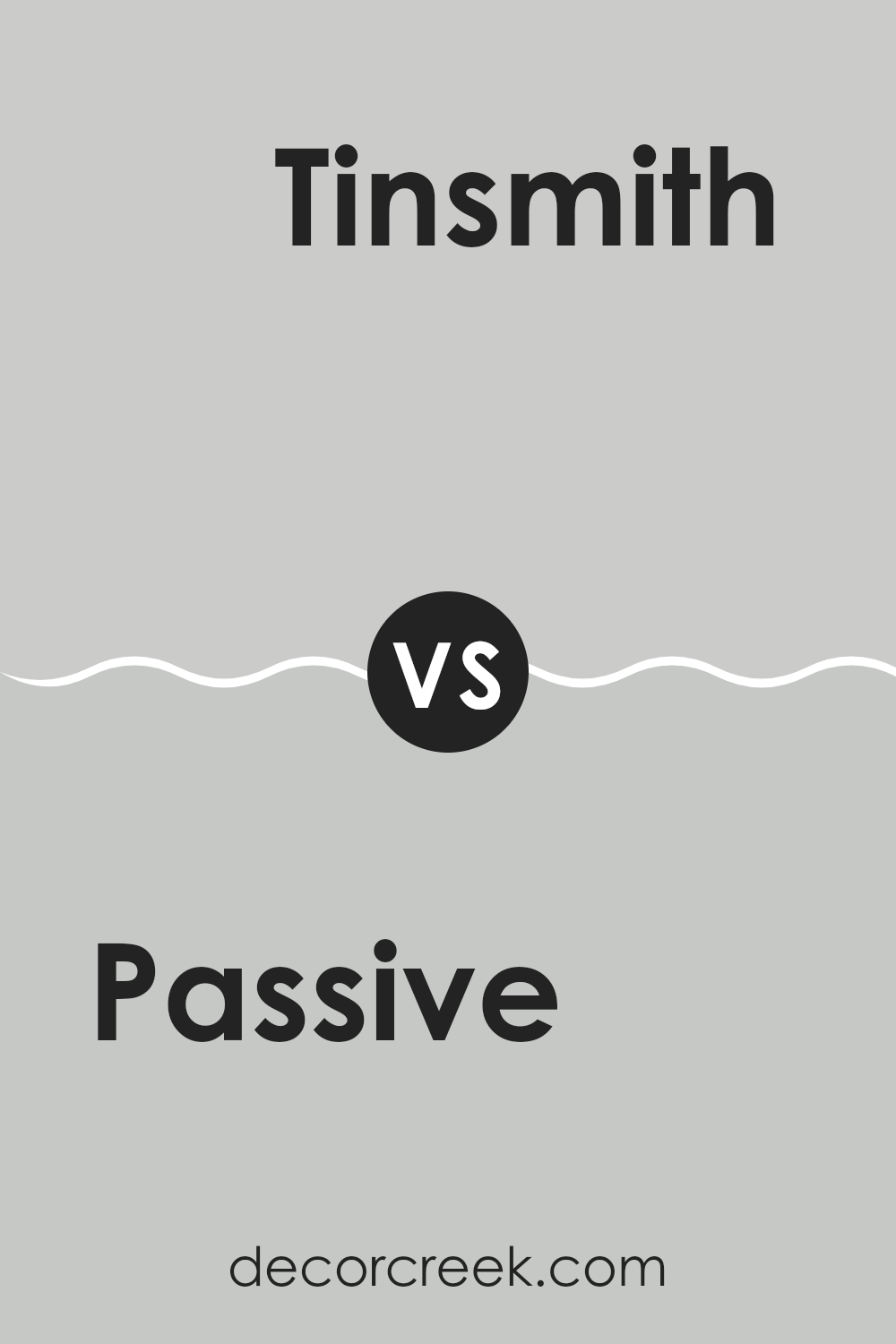
Passive SW 7064 by Sherwin Williams vs Tinsmith SW 7657 by Sherwin Williams
Passive SW 7064 and Tinsmith SW 7657, both by Sherwin Williams, are subtle gray shades that can strongly shape the mood of a room. Passive is a slightly warmer gray that brings a cozy and welcoming feeling to a room.
It’s a flexible color that works well in many settings, helping rooms feel more comfortable and lived in. In contrast, Tinsmith is a cooler gray with a lighter, almost silvery look. It gives a fresher and cleaner feel that can help smaller rooms look bigger and more open.
This shade is a great option if you’re aiming for a modern and simple style in your home. Both colors are neutral and pair nicely with many décor styles and other hues, but choosing between a warmer or cooler gray will guide the overall atmosphere of the room.
You can see recommended paint color below:
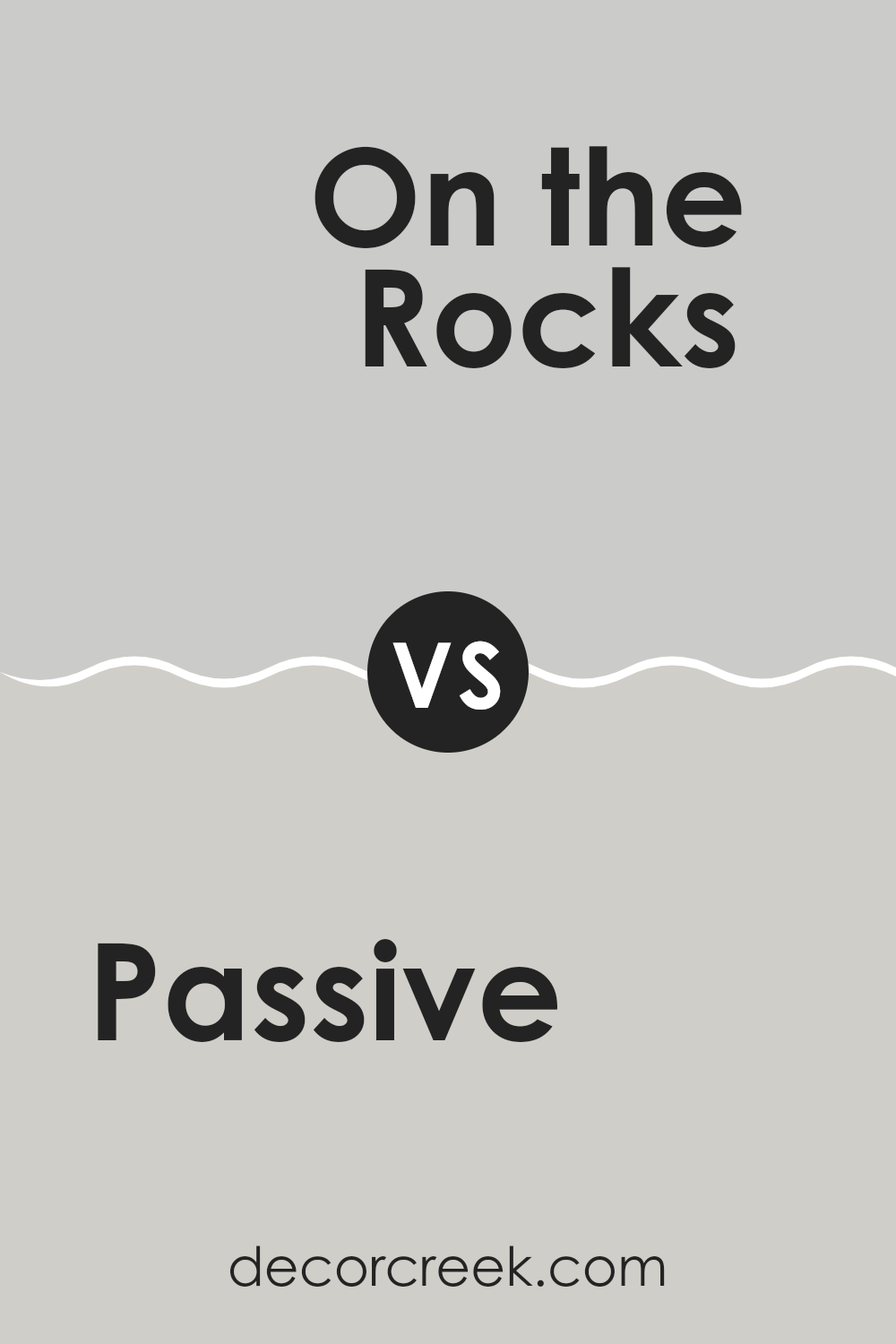
Passive SW 7064 by Sherwin Williams vs On the Rocks SW 7671 by Sherwin Williams
“Passive” and “On the Rocks” are two paint colors by Sherwin Williams that share a cool, neutral palette but show slight differences in tone. “Passive” is a light to medium gray with a calm and soft look, making it a strong choice for rooms where you want a gentle touch of color without feeling overwhelming. It fits nicely in many settings, pairing well with both modern and traditional décor.
In contrast, “On the Rocks” is a lighter shade that looks like a soft, silvery gray. It’s ideal for shaping a bright and open feel in a room, as it reflects more light thanks to its paler tone. This shade can help small rooms seem larger and more spacious, which makes it a smart pick for smaller bathrooms or compact kitchens.
Both shades are flexible, but the choice depends on the effect you want—either a bit more depth with “Passive” or a lighter, more open mood with “On the Rocks.”
You can see recommended paint color below:
As I finish writing about SW 7064 Passive by Sherwin Williams, I realize how special this paint color truly is. It’s a soft gray with a touch of blue that brings a sense of calm to any room without feeling too cold or distant. The color works beautifully in areas where you want to relax, like bedrooms or living rooms. I’ve found that it’s not only attractive but also very practical because it pairs well with many décor styles and furniture pieces.
Using Passive helps enhance a room with a more open and clean feel. It acts like a backdrop that allows other colors or décor items to stand out. I think it’s a wonderful choice if you’re planning to refresh your room without going too bright or too dark. It’s similar to finding that perfect pair of jeans that matches almost anything in your closet.
So, if you’re thinking about updating your room, SW 7064 Passive is truly worth a look. It helps shape a room that feels fresh and cozy at the same time, and it’s easy to understand why so many people love it. Whether your room has lots of natural light or needs a gentle lift, Passive by Sherwin Williams is a thoughtful choice that fits just right.
Ever wished paint sampling was as easy as sticking a sticker? Guess what? Now it is! Discover Samplize's unique Peel & Stick samples.
Get paint samples